Best Magnesium Supplement for Sleep: Form, Dose & Timing

If you are looking for a magnesium supplement to support better sleep, the form matters more than the milligrams. Magnesium glycinate (also written as magnesium bisglycinate) is the form most often chosen for nighttime use because it is highly absorbable and gentle on the stomach. A typical evening serving sits in the range of 200-400 mg of elemental magnesium, taken about 30-60 minutes before bed. A 2022 meta-analysis of randomized trials found that supplemental magnesium was associated with improvements in self-reported sleep quality and how quickly people fell asleep. Magnesium is not a sedative and it is non-habit forming, it helps support your body’s own wind-down process rather than overriding it.
This guide walks through the different forms of magnesium, how much to take and when, capsules vs. gummies vs. powder, and how magnesium compares with melatonin, so you can choose the magnesium supplement that fits the kind of rest you are after.
Why magnesium is linked to sleep
Magnesium is an essential mineral involved in hundreds of processes in the body, and several of them touch directly on relaxation and rest. It plays a role in supporting GABA activity, GABA is the calming neurotransmitter that helps quiet a busy mind, and it supports healthy muscle and nervous-system function, which is part of how the body shifts from “on” to “off” at the end of the day.
It also matters that a lot of people simply do not get enough. U.S. national survey data has repeatedly shown that a large share of adults take in less magnesium than the recommended amount from food alone. When intake runs low over time, that everyday “wired but tired” feeling, lying down exhausted but unable to switch off, can become more familiar. Supplementing helps support healthy magnesium levels, which in turn supports the relaxation side of the sleep equation. For a deeper look at the mechanism, see our science-backed guide to magnesium glycinate for sleep.
Which form of magnesium is best for sleep?
This is where most shoppers get stuck, because the label rarely explains the difference. Not all magnesium is created equal, the form determines how well your body absorbs it and how it feels.
| Form | Best known for | Notes for sleep |
|---|---|---|
| Magnesium glycinate (bisglycinate) | Relaxation & rest | Highly absorbable, gentle on digestion, the form most often chosen for evening use. |
| Magnesium citrate | Occasional regularity | Well absorbed, but more likely to have a laxative effect at higher doses. |
| Magnesium oxide | Low cost / high label number | Cheap and common, but poorly absorbed, a high milligram number on the bottle can be misleading. |
| Magnesium L-threonate | Cognitive support | Studied for brain-related uses; usually more expensive and not the first pick purely for sleep. |
The short version: for nighttime relaxation, glycinate is the form most people reach for, citrate is a reasonable second, and oxide’s big milligram number on the front of the bottle often hides how little is actually absorbed. We break down every form side by side in magnesium glycinate vs. citrate vs. bisglycinate vs. threonate.
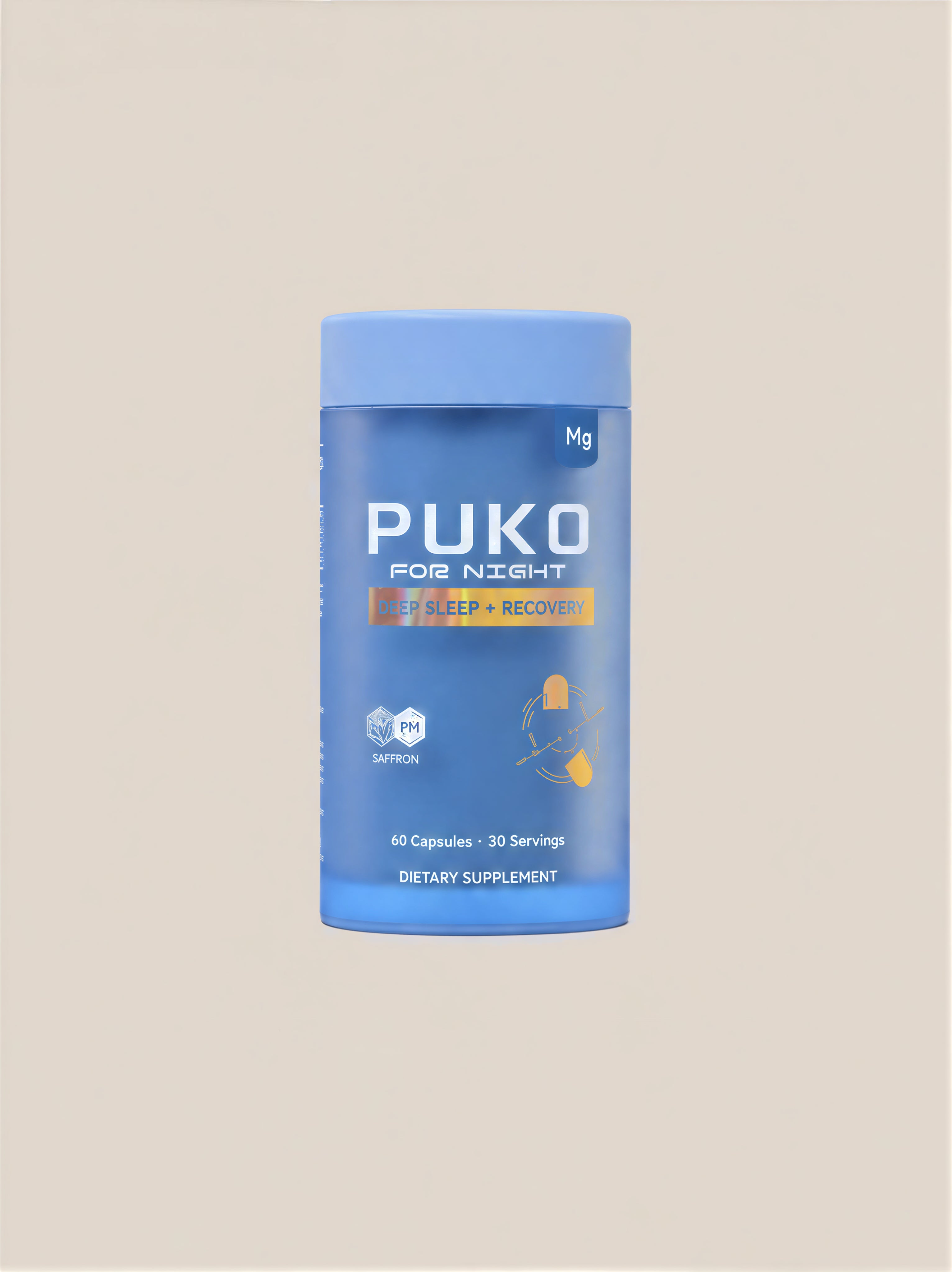
Both PUKO sleep formulas are built on Magnesium Glycinate Chelate for exactly this reason: PUKO Deep Sleep + Recovery (magnesium glycinate with tart cherry and saffron) and PUKO Unwind + Sleep (magnesium glycinate with KSM-66® ashwagandha and lemon balm).
How much magnesium should you take for sleep?
For sleep support, a common evening serving provides 200-400 mg of elemental magnesium. A few things worth knowing:
- “Elemental” is the number that counts. The figure that matters is the elemental magnesium per serving, not the weight of the whole compound. PUKO’s sleep formulas provide 240 mg of magnesium per 2-capsule serving (about 57% of the Daily Value).
- More is not better. People often search for a magnesium 400 mg product assuming a bigger number wins. Past the point your body uses, extra magnesium tends to be processed out, and at higher doses some forms can loosen the stool.
- Consistency beats intensity. Magnesium tends to show its best support when taken nightly over a few weeks rather than as a one-off. For realistic expectations, see how long magnesium glycinate takes to work for sleep.
When should you take magnesium for sleep?
For nighttime support, most people take magnesium about 30-60 minutes before bed, with or without a small snack. Taking it with a little food can make it easier on a sensitive stomach. If you use magnesium during the day for general wellness, you can also split the serving, some in the morning, some at night. Timing is flexible; the more important habit is taking it consistently.
Capsules, gummies, or powder?
The delivery format is mostly about preference and what helps you stick with it:
- Capsules, the most straightforward way to get a precise, sugar-free dose of a specific form like glycinate. This is how PUKO’s formulas are delivered.
- Magnesium glycinate gummies, convenient and easy to take, but they usually contain less magnesium per serving and often add sugar, so check the elemental magnesium on the label.
- Magnesium powder, mixes into water for a warm bedtime drink and is easy to scale, though it is most often sold as citrate (which leans toward the regularity use described above).
Whichever format you choose, work backward from one question: how many milligrams of elemental magnesium, and in which form, am I actually getting?
Magnesium vs. melatonin for sleep
These two get lumped together, but they do very different things. Melatonin is a hormone that signals timing, it tells your body roughly when it is night. Magnesium is a mineral that supports the relaxation and muscle-and-nerve calm that helps you wind down. Because magnesium is not a hormone, it is non-habit forming and does not carry the “groggy the next morning” feeling some people report with melatonin.
That difference is the whole reason PUKO’s sleep line is melatonin-free, it is designed to support your body’s own rhythm rather than override it. If you are weighing the two, read our full comparison of melatonin for sleep and natural alternatives.
What does the research say?
The evidence on magnesium and sleep is encouraging, while still developing:
- A 2022 meta-analysis in Sleep Medicine Reviews pooled randomized controlled trials and found supplemental magnesium was associated with improvements in self-reported sleep quality and time to fall asleep, with effects most pronounced in older adults.
- A 2012 double-blind RCT in PLOS ONE followed older adults taking magnesium daily for eight weeks and reported improvements in measures of sleep efficiency alongside favorable changes in cortisol and melatonin markers.
- Mayo Clinic Press guidance notes the glycinate form is a sensible choice when magnesium is being used to support sleep, given its absorption and tolerability.
Stress is often the other half of the picture. If your nights are driven by a mind that won’t stop running, our complete guide to cortisol and sleep explains how the stress hormone keeps you wired at midnight, and why some people pair magnesium with an adaptogen like ashwagandha. We compare those two directly in magnesium glycinate vs. ashwagandha for sleep.
Is a magnesium supplement safe to take every night?
For most healthy adults, magnesium glycinate is well tolerated and suitable for nightly use, it is non-habit forming, so there is no “tolerance” spiral and no dependency. The most common effect at higher doses is a loosening of the stool, which is more associated with citrate and oxide than with glycinate. We cover this in detail in magnesium glycinate side effects. As always, if you are pregnant, nursing, have a kidney condition, or take prescription medication, check with your healthcare provider before adding a new supplement.
How to choose your PUKO magnesium formula
Both PUKO night formulas are melatonin-free and built on highly absorbable magnesium glycinate, the difference is the supporting cast:
- Deep Sleep + Recovery, magnesium glycinate + Montmorency tart cherry + saffron. A good fit if you train hard or want overnight recovery support. (Learn more in the Deep Sleep + Recovery ingredient breakdown.)
- Unwind + Sleep KSM-66, magnesium glycinate + KSM-66® ashwagandha + lemon balm. A good fit when stress is what keeps you up, because ashwagandha helps the body manage everyday stress.
Best magnesium supplement for sleep: frequently asked questions
What is the best form of magnesium for sleep?
Magnesium glycinate (bisglycinate) is the form most often chosen for sleep because it is highly absorbable and gentle on the stomach. Citrate is a reasonable alternative but is more likely to loosen the stool; oxide is poorly absorbed despite often showing a high milligram number on the label.
How much magnesium should I take to sleep?
A common evening serving provides 200-400 mg of elemental magnesium. PUKO’s sleep formulas provide 240 mg per serving. The elemental amount, not the weight of the whole compound, is the number to check.
When should I take magnesium for sleep?
Most people take it about 30-60 minutes before bed. Taking it with a small snack can make it easier on a sensitive stomach. Consistency over a few weeks matters more than the exact minute.
Can I take magnesium and melatonin together?
They work differently, magnesium supports relaxation, melatonin signals timing, and some people do use both. PUKO’s formulas are intentionally melatonin-free so you can support your body’s own rhythm. If you already take melatonin, talk to your healthcare provider about combining supplements.
Is it safe to take magnesium for sleep every night?
For most healthy adults, magnesium glycinate is well tolerated for nightly use and is non-habit forming. If you are pregnant, nursing, have a kidney condition, or take medication, check with your healthcare provider first.
† These statements have not been evaluated by the Food and Drug Administration. This product is not intended to diagnose, treat, cure, or prevent any disease. PUKO products are not intended to treat insomnia or other sleep disorders. Individual results may vary.
You May Also Like

How to Fall Asleep Faster: An Evidence-Based Guide
Best Supplement for Staying Asleep? An Evidence Guide
Can Supplements Help Sleep Apnea? Evidence, Limits and Safer Next Steps
Sleep Supplements: What the Evidence Shows and How to Compare Options
Ashwagandha Tea vs Supplement: Which Form Works Better?

Does Chamomile Tea Help You Sleep? Tea vs Extract Evidence
How to Sleep During the Day After a Night Shift