Best Supplements for Focus and Concentration: A Label-First Guide

Written by Iris for PUKO Nutrition.
Relationship disclosure: PUKO Nutrition publishes this guide and sells PUKO Focus + Drive. The label-reading framework applies to any brand; our product mention is not an independent recommendation.
TL;DR: There is no single “best” focus supplement for everyone. Start by deciding whether you want short-term alertness or longer-term nutritional support, then compare the exact serving, disclosed caffeine, studied ingredient form and dose, safety warnings, and evidence for the finished formula. A longer ingredient list or a stronger stimulant feeling does not prove better concentration.
What “best for focus and concentration” should mean
A useful comparison begins with the job you want the product to do. Feeling sleepy during one afternoon is different from persistent fatigue, memory loss, or trouble concentrating that interferes with daily life. Sleep, meals, medicines, stress, and health conditions can all matter. A supplement should not replace an assessment of symptoms that are new, persistent, worsening, or unexplained.
For an ordinary supplement-shopping decision, “best” should mean transparent, appropriate for your goal, tolerable for you, and supported without exaggerating what the research tested. It should not mean the product with the most ingredients, the highest stimulant dose, or the boldest promise.
Compare the main focus-supplement categories
| Category | What to verify | Important limit |
|---|---|---|
| Caffeine or caffeine-containing botanicals such as guarana | Actual caffeine milligrams per serving, serving size, other daily caffeine, and timing | “Natural caffeine” is still caffeine. A guarana-extract weight is not automatically the caffeine dose. |
| Phosphatidylserine (PS) | Ingredient source, milligrams per serving, population and duration used in cited studies | Research on specific preparations and doses does not establish an immediate or universal focus benefit. |
| Vitamin or mineral products | Which nutrient, dose, percent Daily Value, and whether a deficiency is actually present | Correcting a real deficiency and improving focus in a person without one are different claims. |
| Multi-ingredient “nootropic” blends | Every ingredient amount, stimulant total, interactions, and evidence for the complete blend | Ingredient studies do not automatically prove the finished combination works better. |
Caffeine and guarana: useful only when the dose is clear
Caffeine can increase alertness, but more is not automatically better for concentration. The practical questions are how many milligrams the serving supplies, when you take it, what else you consume that day, and how it affects anxiety, heart rate, sleep, and tolerance.
Guarana naturally contains caffeine. If a label says “200 mg guarana extract,” that number describes the extract, not necessarily the caffeine inside it. Look for explicit caffeine milligrams or a reliable standardized percentage. If neither appears, do not reverse-engineer an exact dose. Our guarana caffeine label guide shows the calculation boundary, while how to make caffeine work better covers timing and tolerance.
A 2023 systematic review and meta-analysis found a small reaction-time effect across guarana studies, while accuracy and combined cognitive outcomes were not significantly improved. The review does not prove that every guarana extract releases caffeine slowly, prevents a crash, or improves focus in every user.
Phosphatidylserine: check dose, population, and timeline
Phosphatidylserine is a phospholipid found in cell membranes. Studies have used specific preparations, doses, populations, and durations. For example, a six-month randomized trial in adults aged 50–69 with memory complaints tested 100 mg or 300 mg per day. That design does not establish a fixed response timeline or guaranteed daytime-focus benefit for every product and person.
Compare the study dose with the label instead of treating the ingredient name as proof. For a narrower review, see phosphatidylserine for brain fog and our phosphatidylserine versus ashwagandha comparison.
A seven-point label checklist
- Define the goal. Short-term alertness, an afternoon routine, and a medically significant concentration problem are not the same use case.
- Confirm the serving. Compare amounts per full serving, not per capsule when the serving is two capsules.
- Find the stimulant total. Add coffee, tea, energy drinks, pre-workout, and every supplement source.
- Reject hidden arithmetic. Botanical-extract milligrams do not reveal caffeine milligrams unless the label supplies a valid standardization.
- Match the evidence. Check the ingredient form, dose, population, outcome, and duration instead of relying on “clinically studied.”
- Separate ingredients from the formula. A study on one ingredient is not a trial of the complete product.
- Check safety and timing. Review warnings, medicines, pregnancy or nursing, health conditions, and possible effects on sleep.
What to skip
- Proprietary blends that hide meaningful ingredient amounts.
- Claims that “natural” caffeine cannot cause jitters, sleep disruption, or a crash.
- Products that imply a stronger sensation proves better cognitive performance.
- Stacks built from several products without adding overlapping ingredients and stimulant totals.
- Promises to treat ADHD, memory loss, chronic fatigue, or another medical condition with a supplement.
Where PUKO Focus + Drive fits
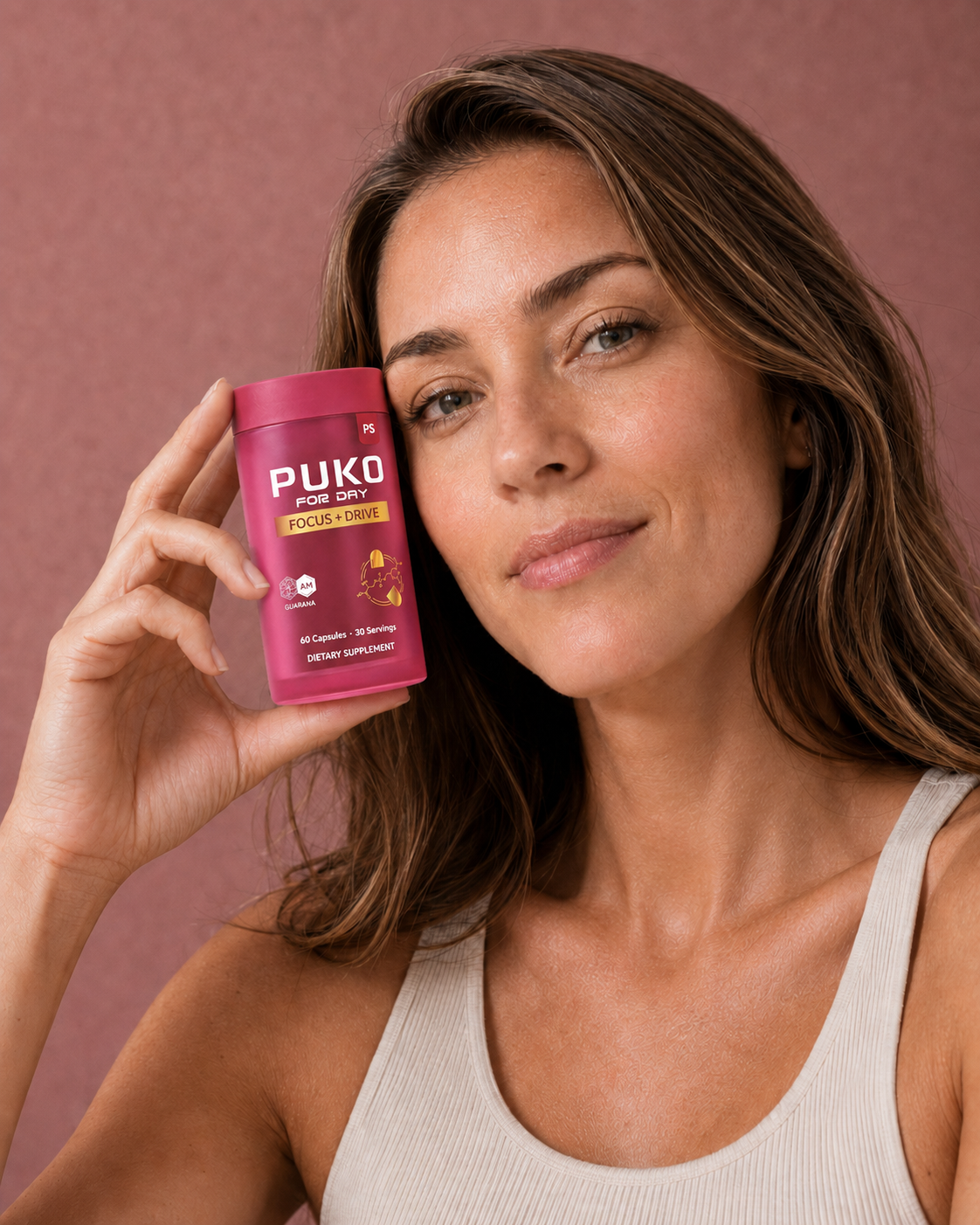
PUKO Focus + Drive lists 60 mg of phosphatidylserine and 200 mg of guarana extract per two-capsule serving. Guarana supplies naturally occurring caffeine, but the 200 mg figure is the extract weight, not a verified caffeine amount. The cited ingredient studies did not test this finished formula or establish slow release, crash prevention, or a fixed time to benefit.
That makes the honest comparison straightforward: read the current label, count all caffeine used that day, consider timing and sensitivity, and do not translate ingredient research into a guaranteed product result.
Frequently asked questions
What is the best supplement for focus and concentration?
No single supplement is established as best for everyone. The most defensible choice matches a specific goal, discloses meaningful amounts, fits your caffeine tolerance and health context, and does not overstate ingredient research.
Are caffeine-free focus supplements better?
They may be more appropriate for someone who avoids caffeine, but “caffeine-free” does not prove effectiveness. Compare the non-stimulant ingredient, dose, studied population, duration, and evidence for the complete formula.
Is guarana better than coffee for focus?
Either can supply caffeine. Compare actual caffeine per serving rather than raw-ingredient percentages. Current evidence does not justify assuming every guarana product releases caffeine more slowly or causes fewer jitters than coffee.
Can I combine a focus supplement with other caffeine?
Add every caffeine source before deciding. Sensitivity varies, and later use can disrupt sleep. The FDA notes that 400 mg per day is an amount not generally associated with negative effects for most adults, but it is not a personal target and does not apply equally to everyone.
Bottom line
The best focus-supplement decision is a label decision before it is an ingredient decision. Clarify the goal, verify the full serving and caffeine amount, compare the study with the actual formula, and treat persistent concentration or fatigue problems as reasons for assessment—not reasons to keep escalating a stimulant.
References
- Kato-Kataoka et al. (2010): soybean-derived phosphatidylserine and memory in a randomized placebo-controlled trial. Participants, doses, and duration differ from PUKO Focus + Drive.
- Hack et al. (2023): systematic review and meta-analysis of guarana and cognitive performance. Findings differed by outcome and do not establish slow release or crash prevention for this product.
- U.S. FDA: Spilling the Beans—How Much Caffeine Is Too Much?
About the author
Iris writes evidence-aware PUKO Nutrition education about supplement labels, focus, sleep, and everyday wellness. PUKO content is general education and is not individualized medical advice.
† These statements have not been evaluated by the Food and Drug Administration. This product is not intended to diagnose, treat, cure, or prevent any disease. Consult a qualified healthcare professional before use if you are pregnant, nursing, take medication, or have a medical condition. Individual results may vary.
You May Also Like
How to Choose a Phosphatidylserine Supplement

How to Fall Asleep Faster: An Evidence-Based Guide
Best Energy Supplements: A Label-First Buying Guide

Magnesium and Coffee: Can You Take Them Together?

Caffeine-Free Fall Drinks: Choose the Base, Not Just the Flavor

Tea vs Coffee for Focus: What Actually Changes Besides Caffeine?
Magnesium Glycinate for Sleep, Stress & Recovery: The Complete Guide