Magnesium Glycinate vs Citrate vs Threonate: Which to Pick

The different forms of magnesium are not interchangeable, each is suited to a different job. Here is the quick version:
- Magnesium glycinate (identical to bisglycinate), highly absorbable and gentle; the form most often chosen for relaxation and sleep support.
- Magnesium citrate, well absorbed, but draws water into the bowel, so it is often used for occasional regularity.
- Magnesium L-threonate, studied for cognitive support; premium-priced.
- Magnesium oxide, cheap, high label number, but poorly absorbed.
If your goal is calmer evenings and easier rest, glycinate is the form to look for. Below, each form is broken down so you can match it to what you actually want.
First, what does “form” even mean?
Magnesium is a mineral that is never sold on its own, it is always bound to something else (an amino acid, an acid, or an oxide) to make it stable. That partner molecule is the “form,” and it changes two things: how much magnesium your body actually absorbs (bioavailability) and how the supplement feels (especially in your gut). That is why a bottle promising “500 mg” of a poorly absorbed form can deliver less usable magnesium than a smaller dose of a well-absorbed one.
Is magnesium glycinate the same as magnesium bisglycinate?
Yes, for shopping purposes they are the same thing. “Bisglycinate” is just the more precise chemical name: each magnesium atom is bound to two (bi-) glycine molecules. Brands use the labels interchangeably. So if you have been comparing magnesium glycinate vs. bisglycinate trying to find a meaningful difference, there isn’t one to worry about. Glycine itself is a calming amino acid, which is part of why this form is associated with relaxation.
Magnesium glycinate vs. citrate
This is the comparison most people are really asking about, and the answer comes down to what you want it to do:
| Magnesium glycinate | Magnesium citrate | |
|---|---|---|
| Absorption | High | High |
| Effect on digestion | Gentle; low likelihood of loose stool | Draws water into the bowel, laxative effect at higher doses |
| Most used for | Relaxation, sleep, everyday stress | Occasional constipation / regularity |
| Best taken | Evening | As needed |
The “difference between magnesium citrate and glycinate” in one sentence: both are well absorbed, but citrate moves things through your gut while glycinate is gentle and calming, which is why glycinate is the one paired with sleep. If your search for magnesium is really about regularity, citrate makes sense; if it’s about winding down, glycinate is the pick.
Magnesium threonate vs. glycinate
Magnesium L-threonate is the newest form to get attention, studied specifically for its ability to support magnesium levels relevant to the brain, and marketed for memory and mental clarity. Compared with glycinate:
- Threonate, the choice if your interest is primarily cognitive support. It carries less elemental magnesium per gram and tends to be the most expensive form.
- Glycinate, the better all-rounder for relaxation, sleep, and everyday stress, at a far more reasonable price.
For sleep specifically, most people do not need to pay the threonate premium, glycinate covers it. See our full guide to the best magnesium supplement for sleep.
Where magnesium oxide fits (and why to be skeptical)
Magnesium oxide shows up in a lot of cheap multivitamins and “high-strength” magnesium products because it packs a big milligram number into a small pill. The catch: it is poorly absorbed, so much of that impressive number passes straight through. It is fine as a low-cost option for occasional regularity, but it is not the form to choose when absorption matters, which, for sleep and stress, it does.
Quick chooser: which magnesium for which goal?
| Your goal | Form to look for |
|---|---|
| Better, calmer sleep | Glycinate / bisglycinate |
| Everyday stress & a sense of calm | Glycinate / bisglycinate |
| Occasional constipation | Citrate |
| Cognitive / memory support | L-threonate |
| Lowest cost, absorption not a priority | Oxide |
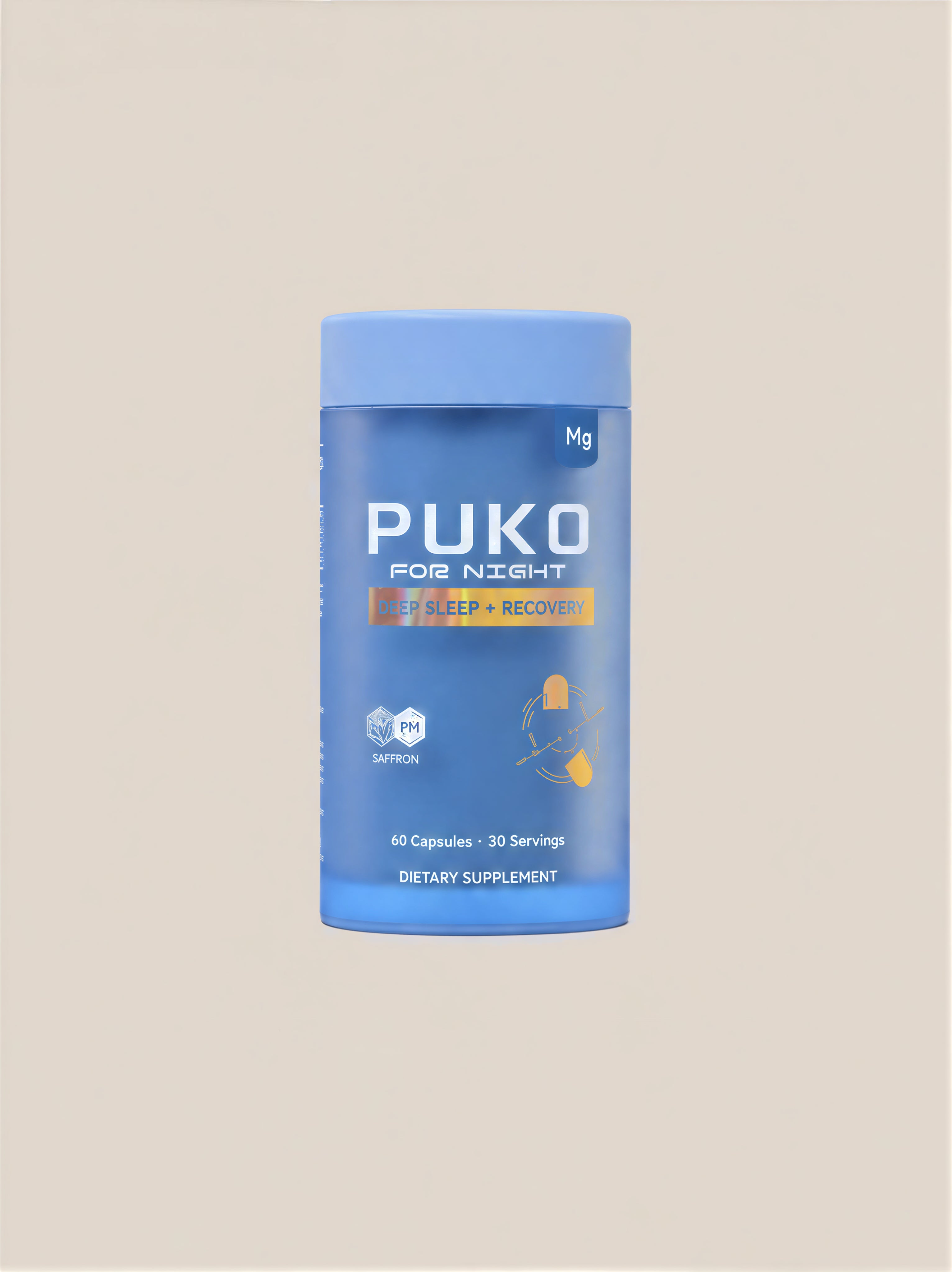
For the relaxation goals at the top of that table, both PUKO night formulas use Magnesium Glycinate Chelate: Deep Sleep + Recovery and Unwind + Sleep KSM-66.
A note on dose and tolerability
Whatever form you choose, the figure that matters is elemental magnesium per serving, typically 200-400 mg for general use. Because glycinate is gentle, it is one of the easier forms to take consistently without digestive upset. For the full picture on tolerability and who should be cautious, read magnesium glycinate side effects.
Magnesium forms: frequently asked questions
Is magnesium glycinate the same as bisglycinate?
Yes. “Bisglycinate” is the more precise chemical name for the same compound. Brands use the two terms interchangeably, so there is no meaningful difference to choose between.
What is the difference between magnesium citrate and glycinate?
Both are well absorbed, but citrate has a laxative tendency and is used for regularity, while glycinate is gentle and calming and is the form paired with sleep and stress support.
Is magnesium threonate better than glycinate?
Not “better”, different. Threonate is studied for cognitive support and costs more; glycinate is the more practical choice for relaxation, sleep, and everyday stress.
Which form of magnesium is least likely to cause diarrhea?
Glycinate (bisglycinate). Citrate and oxide are more likely to loosen the stool, especially at higher doses.
Which magnesium does PUKO use?
PUKO’s sleep formulas use Magnesium Glycinate Chelate, chosen for its high absorption and gentle, calming profile.
† These statements have not been evaluated by the Food and Drug Administration. This product is not intended to diagnose, treat, cure, or prevent any disease. Individual results may vary.
You May Also Like
Sleep Supplements: What the Evidence Shows and How to Compare Options

How to Compare Sleep Supplements: A Label-First Checklist

Magnesium L-Threonate vs Glycinate (Bisglycinate)

Are Magnesium Glycinate Gummies as Effective as Pills?

Magnesium Glycinate for Sleep, Stress & Recovery: The Complete Guide

Magnesium Glycinate for Stress and Cortisol: Why the Form and Timing Matter

When to Take Magnesium Glycinate: Morning or Night?