How Much Caffeine Is in Guarana? Label Guide

Written by Iris
TL;DR: Guarana contains caffeine, but “200 mg guarana extract” does not mean “200 mg caffeine.” To know the caffeine dose, look for caffeine milligrams per serving or a declared standardization percentage. If neither appears, do not reverse-engineer an exact caffeine number from the ingredient weight.
Relationship disclosure: PUKO Nutrition publishes this article and sells PUKO Focus + Drive, a supplement that contains guarana. The label-reading method below applies to any brand; our product mention is not an independent recommendation.
Does guarana have caffeine?
Yes. Guarana (Paullinia cupana) seeds naturally contain caffeine. But the caffeine percentage varies across the raw material, extract and finished product. That is why a seed-level percentage from a study cannot be copied directly onto every powder, capsule or blend.
The useful question is not simply “Does guarana contain caffeine?” It is: How many milligrams of caffeine does this specific serving provide?

Guarana extract milligrams are not caffeine milligrams
A Supplement Facts panel may list “guarana seed extract — 200 mg.” That line gives the amount of extract, not necessarily the caffeine inside it. The caffeine amount can be calculated only when the manufacturer also states a reliable caffeine percentage or directly declares caffeine milligrams per serving.
For example, if a label truthfully states both the extract weight and its standardized caffeine percentage, the arithmetic is:
extract milligrams × declared caffeine percentage = estimated caffeine milligrams
Example: how much caffeine is in 200 mg of guarana extract?
If—and only if—the label states a caffeine percentage, multiply the extract amount by that percentage. For example, 200 mg standardized to 10% caffeine provides an estimated 20 mg of caffeine; 200 mg standardized to 20% provides an estimated 40 mg. These are calculation examples, not universal values for guarana.
| What the label states | Calculation | Estimated caffeine |
|---|---|---|
| 200 mg extract, 10% caffeine | 200 × 0.10 | 20 mg |
| 200 mg extract, 20% caffeine | 200 × 0.20 | 40 mg |
| 200 mg extract, percentage not stated | Cannot calculate | Unknown |
For a product with several caffeine sources, add only the caffeine amounts that the label explicitly declares for guarana, tea, coffee or added caffeine. Do not add the botanical extract weights themselves. If a source has no caffeine amount or reliable percentage, the exact total remains unknown.
If the percentage is missing, stop there. Do not assume that every extract has the same concentration, and do not use a percentage for raw seeds as though it applies to a finished extract.
How to read a guarana supplement label in four steps
- Confirm the serving size. One capsule, two capsules and one scoop can represent different servings.
- Find the guarana amount. Note whether the label lists seed powder, extract or a blend.
- Look for caffeine disclosure. Prefer an explicit “caffeine per serving” value. If only a standardization percentage appears, calculate cautiously from the declared serving.
- Add every caffeine source. Coffee, tea, energy drinks, pre-workouts and other botanical ingredients all count toward the same daily total.

Why “natural caffeine” is still caffeine
The caffeine molecule does not become non-stimulating because it comes from a plant. Guarana may arrive with other plant compounds, but the current evidence does not justify promising a universally slower release, fewer jitters or “no crash” for every extract and every person.
Your experience depends on the actual caffeine dose, timing, other ingredients, food intake, sleep, tolerance and individual sensitivity. Treat phrases such as “smooth energy” as a product-positioning claim unless the finished formula has evidence supporting that exact promise.
Guarana versus coffee: compare servings, not ingredients
Comparing guarana seeds with coffee beans by percentage does not tell you which finished serving delivers more caffeine. A cup of coffee has a brewed serving size; a supplement has an extract weight and formulation. The fair comparison is caffeine milligrams per actual serving.
If your goal is steadier energy, first control the variables you can measure: serving dose, time of day, total daily caffeine and how quickly you consume it. For a broader comparison, read our energy and focus supplement guide.
Timing guarana so it does not undermine sleep
Caffeine can remain active for hours, and sensitivity varies widely. Use guarana earlier rather than later, especially if you notice delayed sleep, lighter sleep, anxiety, palpitations or a need to keep increasing the dose. If reducing caffeine causes headaches or fatigue, our caffeine withdrawal timeline explains why tapering can be easier than stopping abruptly.
The FDA says that, for most adults, 400 mg of caffeine per day is an amount not generally associated with negative effects, while also emphasizing that sensitivity and product caffeine content vary. That is a broad reference point, not a personal target. Pregnancy, nursing, medications, heart rhythm concerns and marked caffeine sensitivity warrant individualized guidance from a qualified clinician.
Where PUKO Focus + Drive fits
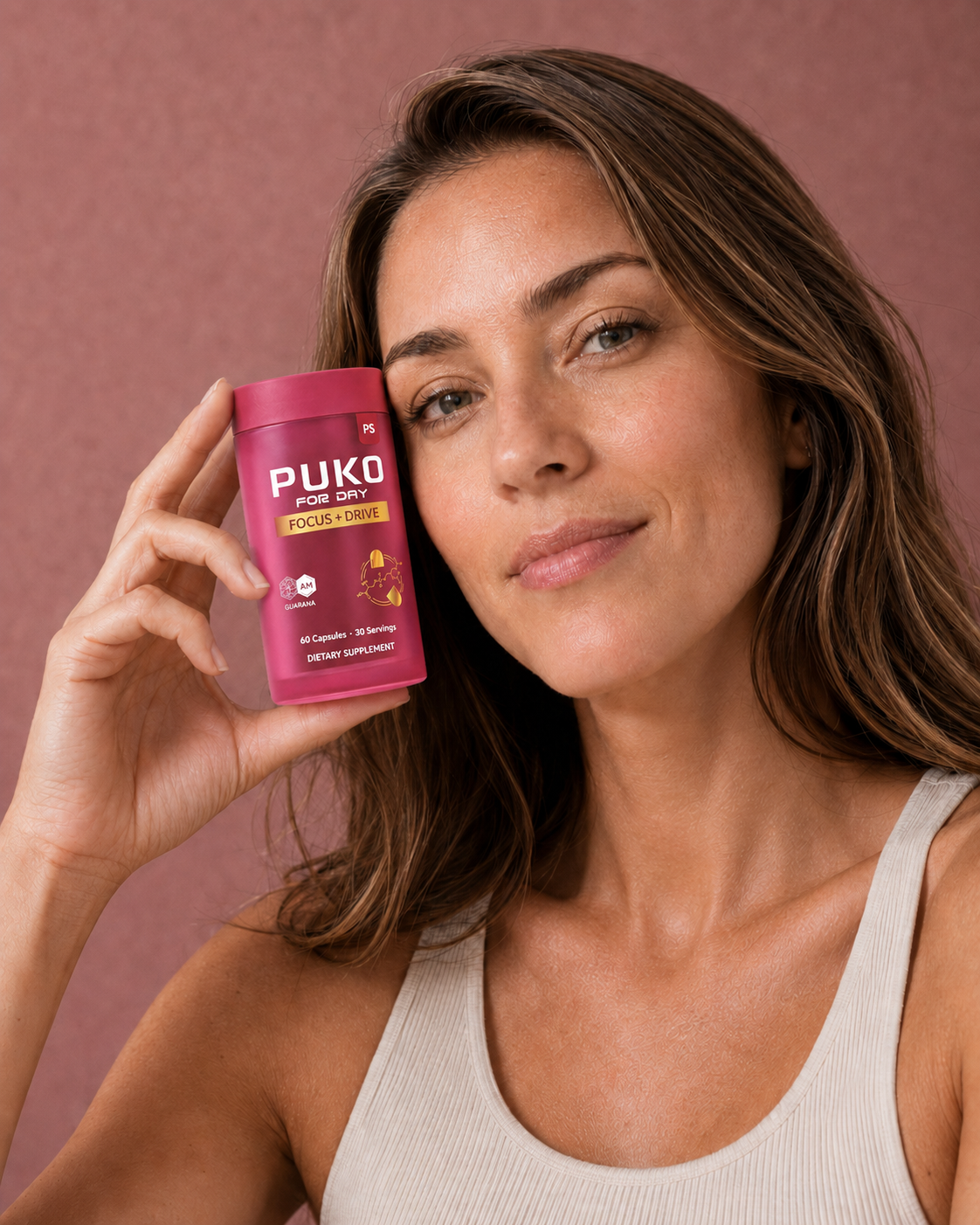
PUKO Focus + Drive includes guarana as part of a multi-ingredient focus formula. Read the current product label for the exact serving and ingredient amounts, count all caffeine used that day and avoid treating the guarana extract weight as an automatic caffeine total.
Frequently asked questions
How much caffeine is in 100 mg of guarana?
There is no universal answer. You need the material’s declared caffeine percentage or an explicit caffeine-per-serving value. Without it, an exact calculation would be a guess.
Is guarana stronger than coffee?
Raw-material percentages and finished servings are different comparisons. Either product can deliver more caffeine depending on concentration and serving size.
Does guarana prevent a caffeine crash?
No finished guarana product can be assumed to prevent a crash. Dose, timing, tolerance, sleep and the rest of the formula all matter.
Can I take guarana every day?
Daily suitability depends on total caffeine, individual sensitivity and health context. Monitor sleep and side effects, and ask a clinician when pregnancy, nursing, medication use or a medical condition is relevant.
Bottom line
Guarana is a caffeine source, not a standardized caffeine number. The most reliable buying habit is simple: compare caffeine per serving, confirm the serving size and add every source used that day. If a label gives only guarana extract milligrams, do not pretend it gives an exact caffeine dose.
References
- Effect of Guarana on Cognitive Performance: A Systematic Review and Meta-Analysis
- FDA: Spilling the Beans—How Much Caffeine Is Too Much?
About the author
Iris writes evidence-aware PUKO Nutrition education about supplement labels, sleep, focus and everyday wellness. PUKO content is general education and is not individualized medical advice.
† These statements have not been evaluated by the Food and Drug Administration. This product is not intended to diagnose, treat, cure, or prevent any disease. Consult a qualified healthcare professional before use if you are pregnant, nursing, take medication, or have a medical condition. Individual results may vary.
You May Also Like
Best Energy Supplements: A Label-First Buying Guide

How to Sleep During the Day After a Night Shift

Tea vs Coffee for Focus: What Actually Changes Besides Caffeine?
Magnesium L-Threonate vs Glycinate (Bisglycinate)
Are Magnesium Glycinate Gummies as Effective as Pills?

Best Supplements for Focus and Concentration: A Label-First Guide

How to Make Caffeine Work Better (and Last Longer)