Skip to content

Welcome to PUKO NUTRITION

Welcome to PUKO NUTRITION

Welcome to PUKO NUTRITION

Welcome to PUKO NUTRITION

Welcome to PUKO NUTRITION

Welcome to PUKO NUTRITION

Welcome to PUKO NUTRITION

Welcome to PUKO NUTRITION

Welcome to PUKO NUTRITION

Welcome to PUKO NUTRITION

Welcome to PUKO NUTRITION

Welcome to PUKO NUTRITION

Cart
0 items

Are Magnesium Glycinate Gummies as Effective as Pills?

by ruoshui liu 04 Aug 2026 0 comments
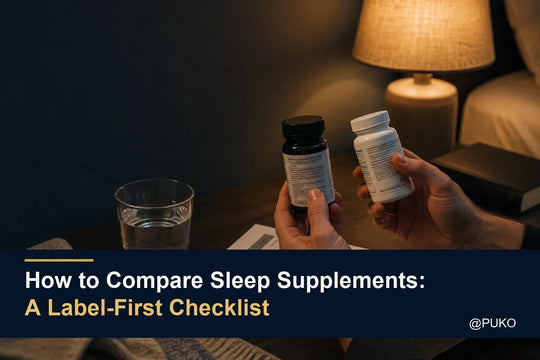
Man comparing magnesium glycinate gummy and capsule supplement labels

Written by Iris for PUKO Nutrition · Updated August 4, 2026

Quick answer: Magnesium glycinate gummies can be as effective as pills when they provide a comparable amount of elemental magnesium from the stated magnesium form, are taken according to their labeled serving directions, and are used consistently. But “gummy” versus “pill” does not settle the question by itself. The useful comparison is the complete label: elemental magnesium per serving, magnesium form, units per serving, sugars or sugar alcohols, other ingredients, adherence, and individual tolerance.

TL;DR

  • Compare the amount listed next to Magnesium in the Supplement Facts panel, not a large front-label number for the total magnesium compound.
  • Confirm the magnesium source or form. A product marketed broadly as a “magnesium gummy” is not automatically magnesium glycinate.
  • Read the serving size carefully. One serving may be one capsule, multiple capsules, one gummy, or multiple gummies.
  • Check sugars, sugar alcohols, flavors, coatings, and additional active ingredients separately from the magnesium amount.
  • A format you can take consistently may be more useful in practice than a theoretically convenient format you regularly skip.
  • Individual digestive tolerance and medication considerations still matter.

The label-first decision aid

Label check What to find How to use it
Elemental magnesium The amount listed next to “Magnesium” per labeled serving Use this as the primary numerical comparison across gummies and pills
Magnesium form The “as” or “from” statement, such as magnesium from a glycinate chelate Confirm that the compared products actually use the form you intend to buy
Serving size The number of gummies, capsules, tablets, or scoops in one labeled serving Do not compare one physical unit with another product’s full serving
Other ingredients Sugars, sugar alcohols, flavors, colors, capsule materials, coatings, and fillers Consider dietary preferences and digestive tolerance separately from magnesium
Additional actives Herbs, vitamins, minerals, or other ingredients with listed amounts Compare the complete formula rather than attributing everything to magnesium
Practical adherence Whether the directions, taste, size, and routine are realistic for you Choose a format you can use consistently and as labeled
Individual tolerance Your response to the amount, form, sweeteners, and complete formula Stop and seek professional advice if you develop concerning symptoms
Magnesium gummy and capsule labels arranged for a serving-size comparison
Compare the complete label—not just “gummy” versus “pill.”

Can gummies really be as effective as pills?

Potentially, yes. If a gummy and a pill deliver comparable elemental magnesium from the intended form, and both are taken consistently according to their labels, the dosage form alone does not prove that one will be more effective.

That answer has limits. Two products may differ in elemental magnesium, serving size, magnesium source, additional active ingredients, sweeteners, manufacturing specifications, and how consistently a person uses them. Individual health status and tolerance can also change the experience. A label comparison can therefore tell you whether two products are reasonably comparable, but it cannot guarantee identical results for every person.

“Same format” does not mean “same formula”

Two gummies can have different magnesium forms and different amounts per serving. Two capsules can also contain different magnesium amounts, different additional ingredients, and different serving directions. The physical format is only one product characteristic.

“Same front-label number” may not mean the same thing

A large number on the front of a bottle may describe an ingredient compound, a proprietary complex, or a marketing callout. For a cross-product comparison, start with the Supplement Facts panel. The National Institutes of Health explains that a supplement label declares the amount of elemental magnesium, not the weight of the entire magnesium-containing compound. See the NIH magnesium fact sheet for health professionals.

How to read a magnesium label in the right order

1. Start with serving size

Find the serving size at the top of the Supplement Facts panel. This establishes how many gummies, capsules, tablets, or scoops the listed nutrient amounts represent. The FDA’s dietary supplement labeling guidance explains how serving size and amount per serving are presented on the panel. Review the FDA dietary supplement nutrition-labeling guide.

A common comparison error is putting one gummy beside one capsule and treating them as equivalent units. The labels may define entirely different servings. Compare one labeled serving with one labeled serving first.

2. Find elemental magnesium per labeled serving

Locate “Magnesium” in the Supplement Facts panel and note the milligrams listed per serving. This is the most useful number for comparing the magnesium contribution of two products.

Do not estimate a universal gummy-to-capsule conversion from the format. A gummy product’s elemental magnesium per serving can be higher, lower, or similar to a capsule product’s amount depending on the actual formulation.

3. Confirm the magnesium form

Look for wording such as “Magnesium (as …)” or “Magnesium (from …).” If you specifically want magnesium glycinate, confirm that the source statement actually identifies a glycinate or glycinate-chelate form. Do not assume that every product using the word “magnesium” on its front label uses magnesium glycinate.

The form is relevant, but it still should not be used as a shortcut for predicting an identical outcome. Formulation, amount, product quality, adherence, diet, health status, and individual response remain part of the comparison.

4. Translate the serving into units without changing the directions

After recording elemental magnesium per serving, record how many physical units make up that serving.

Label-reading calculation: elemental magnesium per unit = elemental magnesium per labeled serving ÷ units per labeled serving.

This calculation can help you understand a label, but it is not an instruction to create a new dose or exceed the manufacturer’s directions. A product may be formulated and directed as a complete serving for reasons beyond the magnesium amount alone.

5. Read sugars, sugar alcohols, and Other Ingredients

Gummies may use sugars, sugar alcohols, acids, flavors, colors, or gelling agents to produce their taste and texture. The amounts and ingredients vary by product. Sugar alcohols may be relevant for people who experience digestive discomfort from them.

Capsules and tablets also have Other Ingredients. These may include capsule materials, coatings, flow agents, colors, or fillers. “Pill” does not automatically mean ingredient-free, and “gummy” does not automatically mean high-sugar. Read the actual product label.

6. Consider adherence honestly

A person who dislikes swallowing pills may use a gummy more consistently. Someone who dislikes sweet supplements or does not want another chewable routine may prefer a capsule. Others may prefer a powder mixed according to its labeled directions.

Consistency matters, but convenience does not override the label. The practical goal is a format that fits your routine while still providing the intended ingredient, amount, directions, and tolerability.

7. Account for individual tolerance and safety

Higher supplemental magnesium intakes can cause diarrhea, nausea, or abdominal cramping. The NIH sets an adult upper limit of 350 mg per day for magnesium from supplements and medications; magnesium naturally present in food is not included in that limit. Read the NIH consumer magnesium fact sheet for the distinction and current safety information.

Magnesium supplements can interact with certain medicines, including some antibiotics and osteoporosis medicines. People with impaired kidney function may require individualized guidance. Ask a qualified clinician or pharmacist before use if you have kidney disease, are pregnant or nursing, take prescription medication, or are unsure whether a product is appropriate for you.

A worked comparison without a fixed gummy-to-pill conversion

Question Gummy product Pill product
Elemental magnesium per serving? Copy the amount next to “Magnesium” Copy the amount next to “Magnesium”
Magnesium source? Copy the “as” or “from” statement Copy the “as” or “from” statement
Units per serving? Record the labeled number of gummies Record the labeled number of capsules or tablets
Other ingredients? Check sugars, sugar alcohols, flavors, colors, and gelling agents Check capsule material, coatings, fillers, colors, and flow agents
Additional active ingredients? Record each ingredient and labeled amount Record each ingredient and labeled amount
Realistic to use as directed? Consider taste, routine, storage, and tolerance Consider swallowability, routine, portability, and tolerance

If the two labels show comparable elemental magnesium, the intended magnesium form, and directions you can follow consistently, it is reasonable to regard them as comparable magnesium options. If those details differ, the products are not interchangeable merely because both mention magnesium glycinate.

How PUKO’s current capsule formulas fit this comparison

Relationship disclosure: PUKO Nutrition publishes this article and sells the capsule products discussed below. The following examples describe PUKO’s current labels; they do not prove that capsules are universally more effective than gummies.

PUKO Unwind and Deep Sleep magnesium glycinate capsule formulas side by side
Two current PUKO capsule formulas shown for label comparison.

PUKO Unwind + Sleep lists 240 mg of magnesium from magnesium glycinate chelate per labeled two-capsule serving. Its complete formula also includes 200 mg of KSM-66® ashwagandha and 150 mg of lemon balm.

PUKO Deep Sleep + Recovery lists 240 mg of magnesium from magnesium glycinate chelate per labeled two-capsule serving. Its complete formula also includes 40 mg of Montmorency tart cherry powder and 40 mg of saffron.

These products illustrate why the complete label matters. Even when the magnesium form and amount are the same, additional active ingredients can make two formulas meaningfully different. Compare the purpose and complete Supplement Facts panel rather than choosing solely by “capsule,” “gummy,” or the magnesium number.

Verdict: are magnesium glycinate gummies as effective as pills?

They can be, but the format alone cannot answer the question. A fair comparison requires elemental magnesium per labeled serving, magnesium form, units per serving, Other Ingredients, additional actives, adherence, and individual tolerance.

Do not assume that gummies are weak, pills are strong, powder absorbs faster, or a fixed number of gummies equals one capsule serving. Read both labels, follow each product’s directions, and choose the complete formula that fits your needs and circumstances.

Frequently asked questions

Are magnesium glycinate gummies as effective as capsules?

They can be when the elemental magnesium per labeled serving, magnesium form, directions, adherence, and individual tolerance are comparable. The physical format does not establish effectiveness by itself.

Which number should I compare on the labels?

Start with the milligrams listed next to “Magnesium” in the Supplement Facts panel. That is the declared elemental magnesium per labeled serving. Then compare the source statement, serving size, and complete formula.

How many magnesium gummies equal one pill?

There is no universal conversion. First compare elemental magnesium per labeled serving, then note the units in each serving. Do not change a product’s serving or exceed its directions simply to match another label.

Does a gummy automatically contain less magnesium?

No. Product formulas and serving sizes vary. Some gummies may list less elemental magnesium than some capsule products, but the dosage format alone does not establish the amount.

Do sugars or sugar alcohols make a gummy ineffective?

Not necessarily. They are separate formulation considerations. Check their amounts and assess whether they fit your dietary preferences and digestive tolerance.

Is a capsule automatically better for sleep?

No. Sleep-related outcomes cannot be predicted from the capsule format alone. Consider the complete formula, labeled amount, your routine, your health circumstances, and the strength of evidence for any product-specific claims.

Can I take magnesium with prescription medication?

Magnesium can interact with certain medicines. Ask a clinician or pharmacist about timing and suitability, especially if you take antibiotics, osteoporosis medicines, diuretics, or other prescription products.

References

  1. National Institutes of Health Office of Dietary Supplements: Magnesium — Fact Sheet for Health Professionals
  2. National Institutes of Health Office of Dietary Supplements: Magnesium — Consumer Fact Sheet
  3. U.S. Food and Drug Administration: Dietary Supplement Labeling Guide, Chapter IV
  4. PUKO Unwind + Sleep current product information
  5. PUKO Deep Sleep + Recovery current product information

About the author

Iris writes for PUKO Nutrition about supplement labels, ingredient evidence, and practical wellness decisions. PUKO Nutrition sells dietary supplement products discussed in this article. Content is prepared for general educational purposes and does not replace individualized medical advice.

FDA disclaimer: † These statements have not been evaluated by the Food and Drug Administration. These products are not intended to diagnose, treat, cure, or prevent any disease. Individual results may vary. Consult a qualified healthcare professional before using dietary supplements if you are pregnant or nursing, take medication, have kidney disease or another medical condition, or have questions about an appropriate amount.

Prev post
Next post

Leave a comment

Please note, comments need to be approved before they are published.

Shop the look

Choose options

Puko Nutrition
Enter your email — we'll send your code right away.
Edit option
Have Questions?
Back In Stock Notification

Choose options

this is just a warning
Login
Shopping cart
0 items
0%