How to Choose a Phosphatidylserine Supplement

Written by Iris for PUKO Nutrition.
Relationship disclosure: PUKO Nutrition publishes this guide and sells PUKO Focus + Drive, a multi-ingredient product that contains phosphatidylserine and guarana. PUKO does not sell a standalone phosphatidylserine supplement.
Quick answer: To compare phosphatidylserine (PS) supplements, verify the source, milligrams per full serving, serving size, allergens, other active ingredients, study population and dose, safety warnings, and independent quality information. Do not assume that a 60 mg multi-ingredient formula is equivalent to a standalone 100–300 mg product used in a specific study, or that an FDA qualified health claim means the FDA approved the product.
Start with the product type
PS appears in standalone capsules and in multi-ingredient “brain,” memory, stress, or focus formulas. Those are not interchangeable. A standalone product makes it easier to identify the PS amount and source. A blend may combine PS with caffeine, herbs, vitamins, or other ingredients that change the purpose, safety questions, and evidence.
Before comparing brands, decide whether you are looking for a PS-only product or a broader formula. Then evaluate the complete Supplement Facts panel rather than the front-label promise.
Seven label questions to ask
- How much PS is in the full serving? Check whether the serving is one capsule or several.
- What is the source? Labels may identify soy, sunflower, fish, or another source. This matters for allergens and for matching the preparation used in research.
- Is the amount fully disclosed? Avoid proprietary blends that prevent a meaningful dose comparison.
- What else is active? Caffeine, guarana, herbs, or additional phospholipids create a different product and different safety review.
- Does the cited study match? Compare source, dose, age group, health status, outcome, and duration.
- What are the warnings? Review allergies, pregnancy or nursing, health conditions, medicines, and directions with a clinician or pharmacist when relevant.
- Is quality independently checked? A recognized quality seal may help verify identity or contaminants, but NIH notes that it does not prove a supplement is safe or effective.

How to interpret PS dose claims
Human studies have used different PS sources, doses, populations, and durations. One randomized six-month study in adults aged 50–69 with memory complaints tested 100 mg and 300 mg per day of soybean-derived PS. That study does not establish a universal dose, a rapid onset, or a benefit for every younger adult seeking everyday focus.
Do not choose a dose by copying the largest number in a paper. A study dose is a research condition, not individualized advice. Also avoid treating “per capsule” as “per serving” when the directions require multiple capsules.
What the FDA qualified health claim really means
FDA has issued enforcement-discretion letters for specific qualified health claims about PS and cognitive dysfunction or dementia in older adults. Qualified claims require limiting language because the evidence does not meet the stronger “significant scientific agreement” standard. FDA explains that it does not approve qualified-health-claim petitions, and it does not approve dietary supplements for safety and effectiveness before sale.
In plain language: “FDA qualified health claim” is not the same as “FDA-approved supplement,” “proven to prevent dementia,” or “best nootropic.” Treat any label that removes the qualifying language as a red flag.
PS source and allergen questions
Modern PS products may be derived from soy, sunflower, fish, or other phospholipid sources. If you have a food allergy, verify the source and all allergen statements. A different source is not automatically superior; it may simply be more appropriate for a particular dietary or allergy need.
Research on one preparation cannot automatically be transferred to every source and finished formula. When a brand cites a study, look for the exact ingredient preparation and whether the final product was tested.
Standalone PS versus a PS blend
| Question | Standalone PS | Multi-ingredient formula |
|---|---|---|
| Dose comparison | Usually easier to compare directly | Check the PS amount separately from the total blend |
| Other effects | Fewer active-ingredient variables | Other ingredients may add caffeine, allergens, interactions, or a different purpose |
| Evidence | Still must match source, dose, population, and duration | Ingredient studies do not prove the finished combination |
| Best use of the label | Confirm source and amount | Confirm every active ingredient and the total stimulant load |
Where PUKO Focus + Drive fits
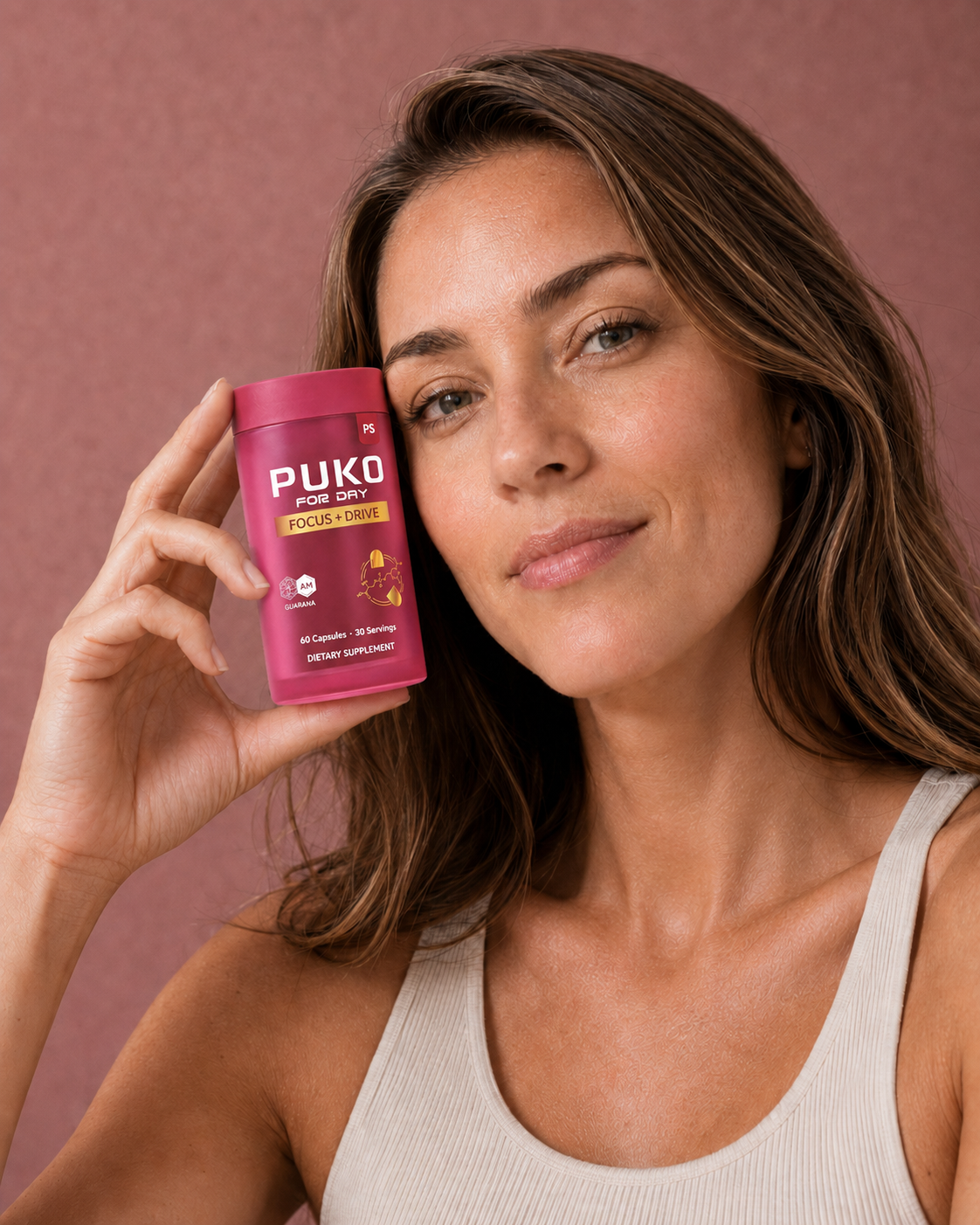
PUKO Focus + Drive is not a standalone PS supplement. Its two-capsule serving lists 60 mg of phosphatidylserine and 200 mg of guarana extract. Guarana contains naturally occurring caffeine, although the extract weight does not disclose an exact caffeine amount. Studies using 100–300 mg per day of soybean-derived PS in older adults do not establish the effect of this finished formula.
If your goal is to compare PS evidence rather than products, start with our phosphatidylserine benefits review. If your goal is focus-product selection, use the focus supplement label checklist.
Frequently asked questions
What is the best phosphatidylserine supplement?
No single product is established as best for everyone. A defensible choice clearly discloses source and amount, fits allergy and health considerations, avoids exaggerated disease claims, and provides credible quality information.
How many milligrams of PS should I take?
There is no universal dose in this guide. Studies use specific amounts in specific populations; those are not personal instructions. Follow the product label and ask a qualified clinician or pharmacist when health conditions, medicines, pregnancy, nursing, or allergies are relevant.
Is sunflower PS better than soy PS?
Sunflower-derived PS may fit someone avoiding soy, but source preference alone does not prove greater effectiveness. Compare the exact preparation with the evidence a brand cites.
Does an FDA qualified health claim mean PS is FDA approved?
No. FDA explains that qualified health claims use limiting language because the evidence is restricted, and dietary supplements are not approved for safety and effectiveness before marketing.
Bottom line
A good PS comparison is a label-and-evidence exercise: identify whether the product is standalone or blended, verify source and full-serving amount, match the research precisely, check allergens and other actives, and reject “FDA approved” or disease-treatment shortcuts.
References
- Kato-Kataoka et al. (2010): soybean-derived phosphatidylserine in older adults with memory complaints
- U.S. FDA: Qualified Health Claims
- U.S. FDA: Qualified Health Claim Letters of Enforcement Discretion
- U.S. FDA: FDA 101—Dietary Supplements
- NIH Office of Dietary Supplements: Frequently Asked Questions
† These statements have not been evaluated by the Food and Drug Administration. PUKO products are not intended to diagnose, treat, cure, or prevent any disease. This article is general education, not individualized medical advice.
You May Also Like

How to Fall Asleep Faster: An Evidence-Based Guide

Best Energy Supplements: A Label-First Buying Guide
Sleep Supplements: What the Evidence Shows and How to Compare Options
Tea vs Coffee for Focus: What Actually Changes Besides Caffeine?
Can Sleep Supplements Improve Deep Sleep? What the Evidence Can Actually Show
Lemon Balm Benefits for Sleep: What the Research and Labels Show
How to Compare Sleep Supplements: A Label-First Checklist