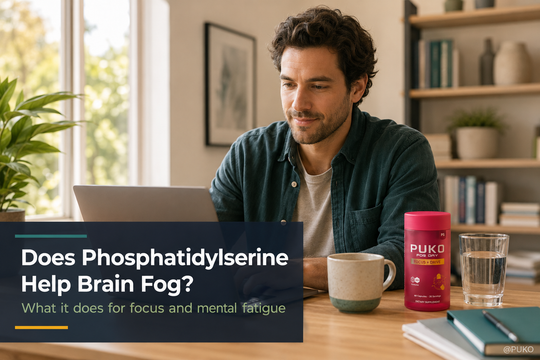
Ashwagandha vs Phosphatidylserine for Focus: Which One (or Both) Should You Take?

Written by Iris for PUKO Nutrition. Disclosure: PUKO sells the supplements linked in this article.
If you've researched supplements for focus, two names keep coming up: ashwagandha and phosphatidylserine. Their research asks different questions. An ingredient studied for stress is not automatically a treatment for poor concentration, and a role in brain-cell membranes does not by itself prove that taking more improves focus.
Here is how to compare the evidence without turning a study result into a personal prescription.
The short answer
Ashwagandha has been studied mainly for stress and sleep; evidence for cognitive function remains insufficient, according to NCCIH. Phosphatidylserine (PS) is a component of cell membranes and has been investigated for cognitive outcomes, including in older adults. Neither fact establishes a clear winner for your focus problem or proves that taking both is better. Persistent or worsening concentration problems deserve assessment rather than a supplement choice based on symptoms alone.
If you are considering a combination, first review the safety and label questions in phosphatidylserine and ashwagandha together.
Quick comparison
Ashwagandha: some preparations have evidence for stress and sleep, but that is not the same as proven improvement in focus. Extracts, study populations and doses differ. There is no universal 2–4-week onset or morning schedule established for this comparison.
Phosphatidylserine: research includes memory and other cognitive outcomes, often in populations that differ from healthy adults seeking better workday concentration. Study doses are not directions for every PS-containing product; use the complete product label and professional advice.
What ashwagandha research can tell us about focus
Ashwagandha is often described as an adaptogen. Some human trials measure perceived stress and cortisol, but difficulty concentrating does not tell you that your cortisol is high. Reducing a stress score is also not the same outcome as improving attention on a cognitive test.
Chandrasekhar and colleagues' 2012 randomized trial enrolled 64 adults with chronic stress and compared a specific ashwagandha root extract, 300 mg twice daily, with placebo for 60 days. The study reported lower stress scores and serum cortisol in the extract group. It was not a head-to-head focus trial against PS and did not test PUKO's finished formula. The dose and duration describe that study, not a recommendation to copy it.
NCCIH notes that studies often use small samples and different preparations, and that evidence is insufficient to determine whether ashwagandha helps cognitive function. A branded extract name alone cannot establish the benefit or timing of a different product.
For current evidence limits and precautions, see NCCIH's ashwagandha overview.
PUKO Unwind + Sleep is a separate evening formula whose listed ingredients include KSM-66 ashwagandha extract. It is not a PS-only product or evidence that a morning ashwagandha schedule is right for you.
What phosphatidylserine research can tell us about focus
Phosphatidylserine is a phospholipid found in cell membranes, including neurons. That biological role is relevant background, but it does not mean supplementation rebuilds your brain or directly fixes poor concentration.
Glade and Smith's 2015 review discusses PS and human brain function, including cognitive aging. It is a review, not a trial of PUKO Focus + Drive or a direct comparison with ashwagandha. Evidence from other doses and populations cannot establish the effect of the 60 mg PS serving in Focus + Drive.
There is no basis here for promising a particular “fog lifted” feeling or a fixed two-to-four-week response. Keep ingredient research separate from what has actually been shown for a finished product.
PUKO Focus + Drive lists 60 mg phosphatidylserine and 200 mg guarana extract per two-capsule serving. It does not list ashwagandha. Guarana contains caffeine; 200 mg of extract is not 200 mg of caffeine, and the listed extract amount does not establish the caffeine dose or release speed.
Which should you choose?
If stress or poor sleep accompanies your concentration problem, discuss those issues with a qualified healthcare professional. Ashwagandha should not be presented as automatically fixing the underlying cause, and it has important precautions.
If memory changes or mental fatigue are the concern, do not use those symptoms alone to decide that you need PS. The practical questions are what is causing the change, how well the research matches you, and what else is in the product.
For a closer look at the PS evidence and its limitations, see phosphatidylserine and brain fog.
Can you take them together?
The evidence reviewed here does not establish that combining PS and ashwagandha is more effective or safe for everyone. The absence of a documented interaction is not a safety guarantee. Ask a pharmacist or qualified healthcare professional to review the exact products, other supplements and medicines before combining them.
Ashwagandha may cause drowsiness or gastrointestinal symptoms, and rare liver injuries have been reported. NCCIH advises avoiding it during pregnancy and breastfeeding and cautions against use with thyroid or autoimmune disorders or around surgery. It may interact with medicines including sedatives, thyroid medicines and immunosuppressants. Separating doses into morning and evening does not eliminate these risks.
What to check before buying
- A disclosed amount for each active ingredient per full serving.
- The actual ashwagandha preparation and any stated standardization, rather than assuming every extract matches a study.
- Other active ingredients, including caffeine-containing guarana, and overlap with your medicines or other supplements. A PS-containing blend is not necessarily stimulant-free.
The everyday factors that matter too
Sleep, meals, daily activity and caffeine habits are worth reviewing alongside concentration problems. This article does not report a personal supplement trial or a customer outcome. Supplements should not replace an assessment when symptoms persist or interfere with daily life.
FAQ
Can I take ashwagandha and phosphatidylserine at the same time?
That cannot be answered safely from the two ingredient names alone. The complete formulas, your health conditions and medicines matter; get an individual interaction check rather than relying on a “no known interactions” claim.
How long until they work?
There is no universal timeline. A study's treatment period is not a promise of when you will notice a benefit, and the available studies do not establish a shared 2–4-week onset for these two ingredients.
Are they stimulants?
PS and ashwagandha are not caffeine, but products containing them can include other active ingredients. Focus + Drive also contains guarana, a caffeine source; do not treat it as a caffeine-free PS supplement.
The bottom line
Compare the study question, preparation and complete formula before deciding whether either ingredient is suitable. The evidence reviewed here does not establish a head-to-head focus winner or a benefit from stacking them. If you are evaluating PUKO Focus + Drive, its formula is PS plus guarana—not PS plus ashwagandha. Review the label and your total caffeine intake rather than inferring results from an ingredient name.
References:
- Chandrasekhar K, et al. Ashwagandha root extract in adults with chronic stress. Indian J Psychol Med, 2012.
- Glade MJ, Smith K. Phosphatidylserine and the human brain. Nutrition, 2015.
- NCCIH. Ashwagandha: Usefulness and Safety.
Disclaimer: This article is for educational purposes, not medical advice. Talk to a qualified healthcare professional before starting or combining supplements, especially if you have a medical condition or take medicines.
† These statements have not been evaluated by the Food and Drug Administration. This information is not intended to diagnose, treat, cure, or prevent any disease. Always consult your healthcare provider before starting any new supplement.
You May Also Like
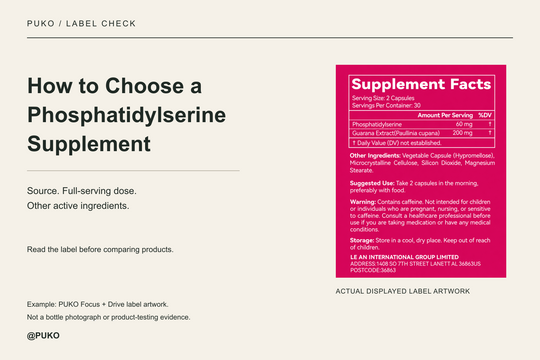
How to Choose a Phosphatidylserine Supplement
Sleep Supplements: What the Evidence Shows and How to Compare Options

Tea vs Coffee for Focus: What Actually Changes Besides Caffeine?
Magnesium L-Threonate vs Glycinate (Bisglycinate)
Best Supplements for Focus and Concentration: A Label-First Guide

How Long Does KSM-66 Ashwagandha Take to Work?

Phosphatidylserine and Ashwagandha Together: Can You Stack Them (and How)?