Phosphatidylserine and Ashwagandha Together: Can You Stack Them (and How)?

Written by Iris, PUKO Nutrition.
TL;DR: Research on phosphatidylserine (PS) or ashwagandha separately does not establish that taking them together is safe for everyone, improves their effects, or works best on a morning-and-night schedule. Before combining them, check the complete formulas, your medicines and health conditions with a pharmacist or clinician. The other ingredients in the bottles matter too.
The short answer: check the combination, not just the names
Taking two supplements on the same day and taking them at the same moment are different questions. Neither can be answered simply by calling the ingredients complementary. There is not enough direct evidence here to recommend a universal PS-and-ashwagandha stack. A lack of well-documented interactions would not, on its own, prove that a combination is safe.
What the separate research can tell you
Phosphatidylserine is a phospholipid found in cell membranes. Studies have investigated it in particular cognitive and exercise-stress settings. A small exercise study involving ten men used 600 mg of PS per day for ten days. That is not evidence that a 60 mg serving of a finished supplement will produce the same result, or that PS must be taken in the morning.
Ashwagandha studies use different preparations and often have small samples. The National Center for Complementary and Integrative Health (NCCIH) says some preparations may help with stress or insomnia, while the evidence has limitations. Those findings do not establish the benefit of combining ashwagandha with PS, or prove that a particular PUKO formula reproduces a trial result.
If you are deciding between the ingredients rather than combining them, compare the specific question a study asked, its preparation and its participants. An ingredient comparison should not be read as a personal dosing recommendation.
Why a cortisol story does not prove the pairing works
A study that measures cortisol under one set of conditions cannot tell you what is causing your tiredness, stress or sleep difficulty. It also cannot establish that two ingredients cover different parts of your day. We have removed the earlier cortisol timeline because it implied a proven morning-versus-night effect that the evidence reviewed here does not establish.
How to review a possible combination
Start with both complete labels, including serving sizes, other active ingredients and warnings. For example, a PS product that also contains guarana needs a caffeine review; the weight of guarana extract does not tell you its caffeine dose or release speed. Include coffee, tea, energy drinks, medicines and any other supplements in that discussion.
For a product containing ashwagandha, check its other ingredients and your personal precautions before deciding whether to add it. Do not increase the number of capsules to match a research dose: doing so increases every ingredient in the formula. Follow the current product directions and any individual advice from your clinician. Trial follow-up dates are not a promise that you will notice a benefit in four, six or eight weeks.
The mistake to avoid: treating timing as a safety check
Moving one product to the evening does not resolve a possible interaction. NCCIH notes that ashwagandha can cause drowsiness or stomach upset and can interact with medicines, including sedatives, anticonvulsants, thyroid medicines, immunosuppressants and some medicines for blood pressure or diabetes. Avoid it during pregnancy and breastfeeding. People with thyroid or autoimmune conditions, or an upcoming operation, should discuss it with a clinician rather than starting a stack themselves. Rare cases of liver injury have also been reported.

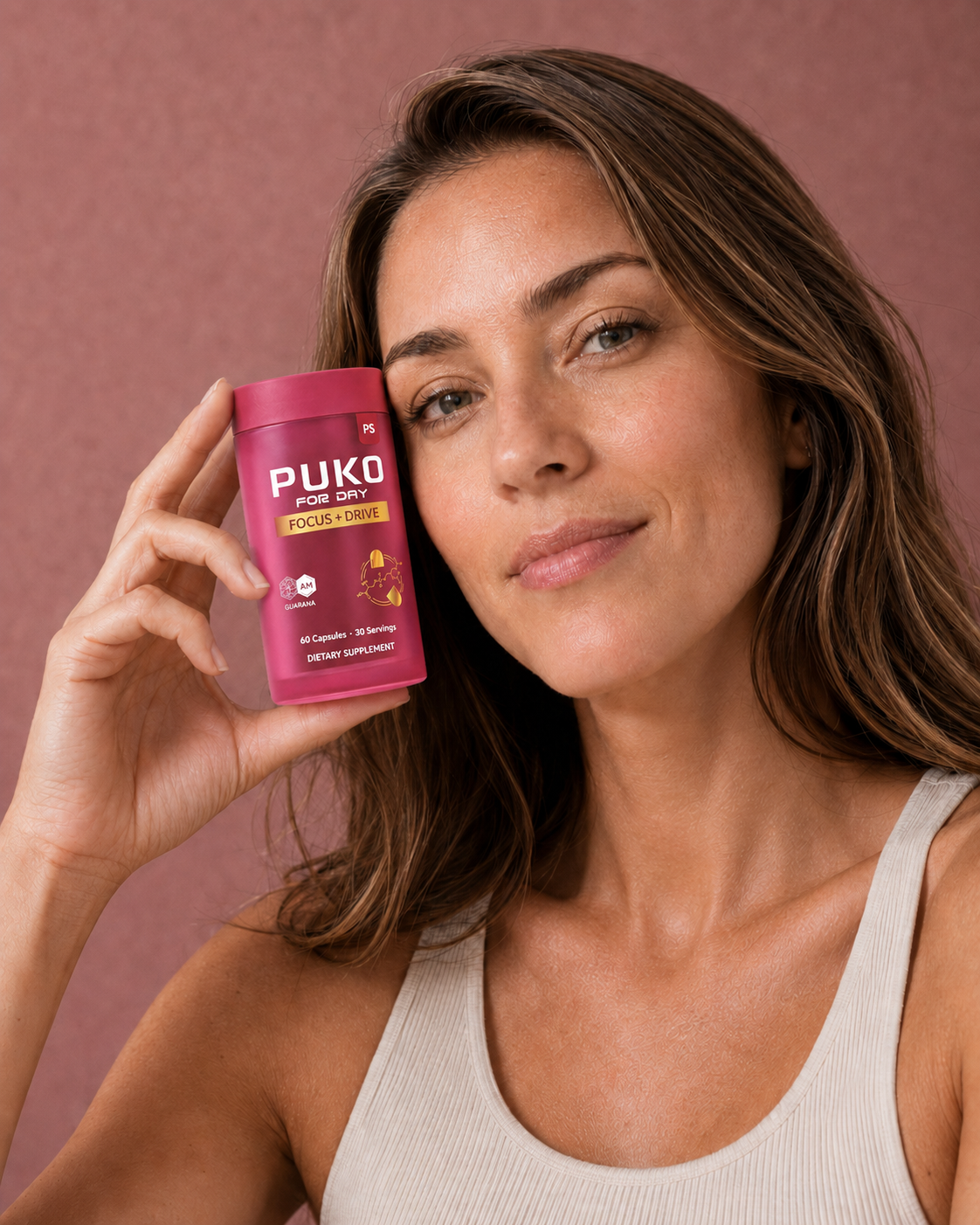
The two PUKO products shown here have different formulas. This photograph is not a recommendation to combine them or add coffee.
Where this fits our formulas
PUKO Nutrition sells these products, so we have a commercial interest in this comparison. Focus + Drive lists 60 mg phosphatidylserine and 200 mg guarana extract per two-capsule serving. Unwind + Sleep lists magnesium glycinate chelate, 200 mg KSM-66 ashwagandha extract and lemon balm. Compare the current complete labels and warnings before buying. Their daytime and nighttime positioning is not proof that using both is more effective or appropriate for you.
What to skip
Skip a stacking plan that depends on an unexplained safety claim, an undisclosed ingredient amount or an assumed caffeine dose. There is no reason to buy a second formula just because it fills the other half of an AM/PM diagram. First identify the question you need answered and whether either product fits your situation.
The basics still matter
A supplement should not replace evaluation of persistent sleep, stress or concentration problems. Reviewing sleep habits, caffeine use and medicines may be more useful than adding another bottle. If symptoms persist or interfere with daily life, seek professional advice rather than trying to diagnose your cortisol level from how you feel.
The bottom line
PS and ashwagandha are separate ingredients with separate evidence and precautions. The research reviewed here does not establish an ideal combined dose, a superior AM/PM routine or a guaranteed time to benefit. Take the actual labels to a pharmacist or clinician before deciding whether to use them together.
FAQ
1. Can you take phosphatidylserine and ashwagandha together?
There is no blanket answer for every person or formula. Evidence on each ingredient separately does not establish the safety or benefit of the combination. Review both complete labels, your medicines and health conditions with a pharmacist or clinician.
2. Why take ashwagandha at night instead of morning?
Some products are marketed for evening use, and ashwagandha can cause drowsiness. That does not establish nighttime as the best timing for everyone or prove an AM/PM combination works better. Follow the current label and individual medical advice.
3. How long until I notice anything?
A study's measurement date is not a personal result deadline. The reviewed evidence does not establish when, or whether, you will benefit from this combination. Do not keep increasing the dose while waiting for an expected six-week effect.
4. What doses does the research use?
Doses and preparations vary by study. They cannot be transferred directly to a different extract, a multi-ingredient product or a combined regimen. The small PS exercise study used 600 mg, whereas Focus + Drive lists 60 mg PS per serving; do not increase the product's serving size to imitate that study.
References:
- NCCIH: Ashwagandha — Usefulness and Safety.
- Starks MA et al. "The effects of phosphatidylserine on endocrine response to moderate intensity exercise." Journal of the International Society of Sports Nutrition, 2008. This small exercise study is not a trial of a PS-and-ashwagandha combination or of either PUKO formula.
† These statements have not been evaluated by the Food and Drug Administration. This information is not intended to diagnose, treat, cure, or prevent any disease. Always consult your healthcare provider before starting any new supplement.
You May Also Like
How to Choose a Phosphatidylserine Supplement

How to Fall Asleep Faster: An Evidence-Based Guide

Best Energy Supplements: A Label-First Buying Guide
Sleep Supplements: What the Evidence Shows and How to Compare Options

Tea vs Coffee for Focus: What Actually Changes Besides Caffeine?

Caffeine Withdrawal vs Caffeine Crash: How to Tell the Difference?
Best Supplements for Focus and Concentration: A Label-First Guide