Lemon Balm Benefits for Sleep: What the Research and Labels Show

Lemon balm (Melissa officinalis) has a long reputation as a calming herb, but a modern supplement label raises a more useful question: what form and amount of lemon balm was actually studied? That distinction matters because tea, dried herb, liquid extracts, and multi-ingredient capsules are not interchangeable.
This guide explains what current research can—and cannot—tell us about lemon balm for sleep, how to compare product formats, and which label details deserve attention before you judge a formula.
What is lemon balm?
Lemon balm is a leafy herb in the mint family. Its botanical name is Melissa officinalis. You may see it sold as loose tea, dried leaf, tincture, single-ingredient capsules, or as part of an evening formula.
The format matters because extraction changes which compounds are concentrated and how much plant material fits into a serving. A cup of tea and a measured extract can both be reasonable products, but the milligram numbers on their labels do not describe the same thing.

What does the research say about lemon balm and sleep?
Human trials are still limited, and the studies do not all test the same preparation.
- A 2024 randomized, double-blind, placebo-controlled trial studied a specific phospholipid-based lemon balm extract in adults with sleep difficulties. The treated group reported greater improvements in several sleep-quality measures than the placebo group. That finding applies to the studied extract and dose—not automatically to every lemon balm product.
- A 2021 randomized trial in menopausal women compared lemon balm capsules with citalopram and placebo for sleep disturbance. The results were encouraging, but the population was specific and the study does not establish a universal sleep dose.
- Combination-product studies are mixed. Some trials that pair lemon balm with other ingredients report benefits, while others find no meaningful difference from placebo. A positive result cannot tell us how much of the effect came from lemon balm alone.
The practical takeaway is modest: lemon balm is worth studying, but “contains lemon balm” is not enough information to predict an outcome.
Tea, powder, and extract are not equivalent
Comparing lemon balm products only by milligrams can be misleading.
Lemon balm tea
Tea usually uses dried leaf steeped in hot water. It can be part of a consistent wind-down routine, but steeping time, water temperature, and the amount of herb change the final preparation. Tea labels also may not provide a standardized extract ratio.
Dried herb or powder
Powder is closer to the whole plant material. A larger milligram number may simply reflect that it is less concentrated than an extract. Do not assume more milligrams means a stronger serving.
Extract
An extract concentrates selected plant compounds. Look for the extract amount per serving, the plant part, an extract ratio if declared, and any standardization statement. If a clinical study used a named or standardized preparation, another extract may not be identical.
Five label details to compare
- Botanical identity: Look for Melissa officinalis, not only the words “calming blend.”
- Plant part: A complete label may state whether the leaf or another plant part is used.
- Amount per serving: Check the full serving size before comparing milligrams. “Per capsule” and “per two-capsule serving” are different.
- Preparation: Identify whether the ingredient is dried herb, powder, or extract. Read any extract ratio or standardization detail that is actually declared.
- Other active ingredients: Magnesium, ashwagandha, valerian, melatonin, or other ingredients change what the formula is testing. Judge the complete formula rather than giving all credit to one botanical.
A real combination-formula example
PUKO Unwind + Sleep is a combination formula, not a single-ingredient lemon balm supplement. Its current two-capsule serving lists 240 mg magnesium (as magnesium glycinate chelate), 200 mg KSM-66 ashwagandha extract, and 150 mg lemon balm extract.

That label tells you the identity and amount of each featured ingredient. It does not prove that the complete formula will reproduce a study of isolated lemon balm. This is why product comparisons should keep the full serving, format, and ingredient combination visible.
How to test an evening routine without confusing the result
Sleep changes from night to night, so a one-night impression is weak evidence. A cleaner personal test keeps the surrounding routine stable:
- Keep wake time and sleep opportunity reasonably consistent.
- Track late caffeine, alcohol, heavy meals, and unusually intense evening exercise.
- Change one supplement or routine input at a time.
- Follow the product label rather than inventing a higher serving.
- Record sleep onset, awakenings, and next-morning alertness in plain language.
A consistent routine does not guarantee a result, but it makes the result easier to interpret.
Safety and when to ask a professional
“Natural” does not mean risk-free. Talk with a qualified healthcare professional before using lemon balm if you are pregnant or breastfeeding, are under 18, have a thyroid condition, use medicines that cause drowsiness, take multiple supplements, or are preparing for surgery. Stop and seek advice if you notice an unexpected reaction.
Persistent insomnia, loud snoring with breathing pauses, severe daytime sleepiness, or a major change in mood deserves medical evaluation rather than another supplement experiment.
Frequently asked questions
Does lemon balm make you sleepy?
Some studies suggest specific lemon balm preparations may support calm or sleep quality, but not everyone feels an immediate sedating effect. Response depends on the preparation, serving, other ingredients, and the reason sleep is disrupted.
Is lemon balm tea the same as a capsule?
No. Tea, whole-herb powder, and extracts differ in concentration and preparation. Compare the form and serving—not just the ingredient name.
Can lemon balm be combined with magnesium?
Combination products exist, but the complete label and your individual health context matter. More ingredients are not automatically better. Check for duplicate magnesium or overlapping calming ingredients across everything you take.
How quickly should lemon balm work?
There is no universal timeline. Some research measures changes over several weeks, while an evening routine may feel different sooner. Avoid treating one night as proof.
Bottom line
Lemon balm has promising but still limited evidence for sleep and stress-related restlessness. The strongest consumer move is not chasing the biggest number—it is identifying the exact preparation, reading the full serving, and judging the complete routine and formula together.
Research cited
- Effects of Melissa officinalis Phytosome on Sleep Quality (2024)
- The Effectiveness of Melissa officinalis L. for Sleep Disturbance in Menopausal Women (2021)
- Effect of a Nutraceutical Combination on Sleep Quality (2024)
This article is for educational purposes only and is not medical advice. Dietary supplements are not intended to diagnose, treat, cure, or prevent any disease.
You May Also Like
Can You Catch Up on Sleep?
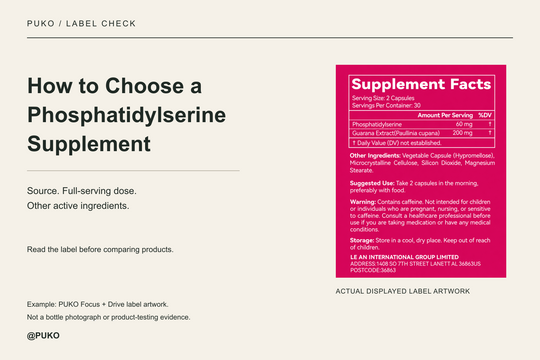
How to Choose a Phosphatidylserine Supplement

How to Fall Asleep Faster: An Evidence-Based Guide
Best Supplement for Staying Asleep? An Evidence Guide
Can Supplements Help Sleep Apnea? Evidence, Limits and Safer Next Steps
Sleep Supplements: What the Evidence Shows and How to Compare Options
Ashwagandha Tea vs Supplement: Which Form Works Better?