Glycine vs Magnesium Glycinate for Sleep: What Differs?

By Iris
The names sound almost interchangeable: glycine, magnesium glycinate, magnesium bisglycinate. If you are comparing supplements for sleep, that resemblance can make two different purchases look like the same thing.
Quick answer: Glycine is an amino acid. Magnesium glycinate is a form of the mineral magnesium bound to glycine. A magnesium amount on a Supplement Facts panel does not tell you that you are getting an equivalent serving of standalone glycine. The human studies reviewed below do not establish which option works better for sleep.
TL;DR
- First identify which substance the label's amount measures.
- Separate glycine studies and magnesium studies cannot be treated as a direct comparison.
- More milligrams does not mean a stronger sleep effect when the ingredients differ.
- You do not need to add glycine simply because a magnesium product has not helped your sleep.
Start with the ingredient, then read the number
Magnesium glycinate is commonly called magnesium bisglycinate. The word “glycinate” describes the form in which magnesium is supplied; it does not turn the product into a standalone glycine supplement. Glycine products may be sold as powders or capsules, and a capsule's appearance cannot identify its contents.
On a U.S. Supplement Facts panel, the amount beside “Magnesium” is the magnesium itself, often called elemental magnesium. The source may follow in parentheses. Read the serving size as well: the listed amount may require two or more capsules. NIH's explanation of magnesium labels.
| What you see | What to check |
|---|---|
| “Magnesium (as magnesium glycinate)” | The elemental magnesium amount and the complete serving. |
| “Glycine” as a separate ingredient | Its own declared amount, units and serving directions. |
| A front-label number for a complex or blend | Whether the facts panel identifies individual ingredients and amounts. |
| Several products in a bedtime routine | Every ingredient across all products, including magnesium from other sources. |
Do not estimate a retail product's standalone glycine serving from its magnesium number or the word “glycinate.” If the label does not declare glycine separately and the question matters to your decision, ask the manufacturer what is actually in the serving. Knowing that glycine is part of a chelate does not establish equivalence to the glycine preparation used in a trial.

What has actually been studied for sleep?
Magnesium bisglycinate: a modest four-week result
A 2025 randomized trial enrolled 155 adults reporting poor sleep. It compared 250 mg of elemental magnesium a day as bisglycinate with placebo for four weeks. Insomnia symptom scores improved slightly more in the magnesium group; the between-group effect was small. The study did not establish an increase in objectively measured deep sleep or compare magnesium with standalone glycine. Its amount and duration describe the research, not a personal dosing plan. Read the magnesium trial.
Glycine: small studies with different questions
A 2007 study in volunteers with unsatisfactory sleep tested 3 g of glycine before bed. Its abstract reports improvements in subjective sleep measures and shorter time to sleep onset and the first slow-wave sleep period. It also reports no change in sleep architecture. Reaching a sleep stage sooner is different from demonstrating that a supplement gives you more deep sleep overall. Read the glycine sleep-study abstract.
A separate 2012 crossover experiment analyzed seven healthy men after planned sleep restriction. Participants took 3 g of glycine or placebo before bed during three-night periods. Some next-day fatigue and vigilance measures improved. It was a small, short study of deliberately reduced sleep, not a trial establishing treatment for chronic insomnia. The participants were employees of the company involved in the research. Read the full sleep-restriction study.
Why these results do not produce a winner
Those studies used different participants, preparations, durations and outcomes. You cannot rank two products by placing their results side by side as though the researchers assigned comparable people to glycine versus magnesium glycinate. That direct comparison is absent from this verified study set.
The numbers are also measuring different substances. A gram amount of an amino acid and a milligram amount of a mineral are not two scores on the same scale. A larger number is not evidence of a stronger effect, and combining the research amounts does not create a tested bedtime recipe.
Use the comparison to answer your actual buying question
If you are trying to meet a magnesium need: begin with your diet, total magnesium intake and any advice you have received about supplementation. Choosing a magnesium form is a different question from choosing a sleep treatment.
If you are interested in a glycine study: check that the product actually identifies glycine and understand the study's limits. Do not assume a magnesium-glycinate bottle reproduces it.
If you already take magnesium: lack of improvement in sleep does not show that you need additional glycine or a higher magnesium amount. Revisit what you hoped to change and whether the problem needs assessment.
If you are comparing blends: look beyond the headline ingredient. Different botanicals, amino acids and serving sizes make the complete products different.
The following guides are published by PUKO Nutrition, which also sells supplements. Our sleep supplement label checklist provides a worksheet for recording those details. For background on magnesium forms, see our magnesium glycinate guide.
A worked label example: PUKO Deep Sleep + Recovery
Disclosure: PUKO Nutrition publishes this article and sells the formula discussed here.
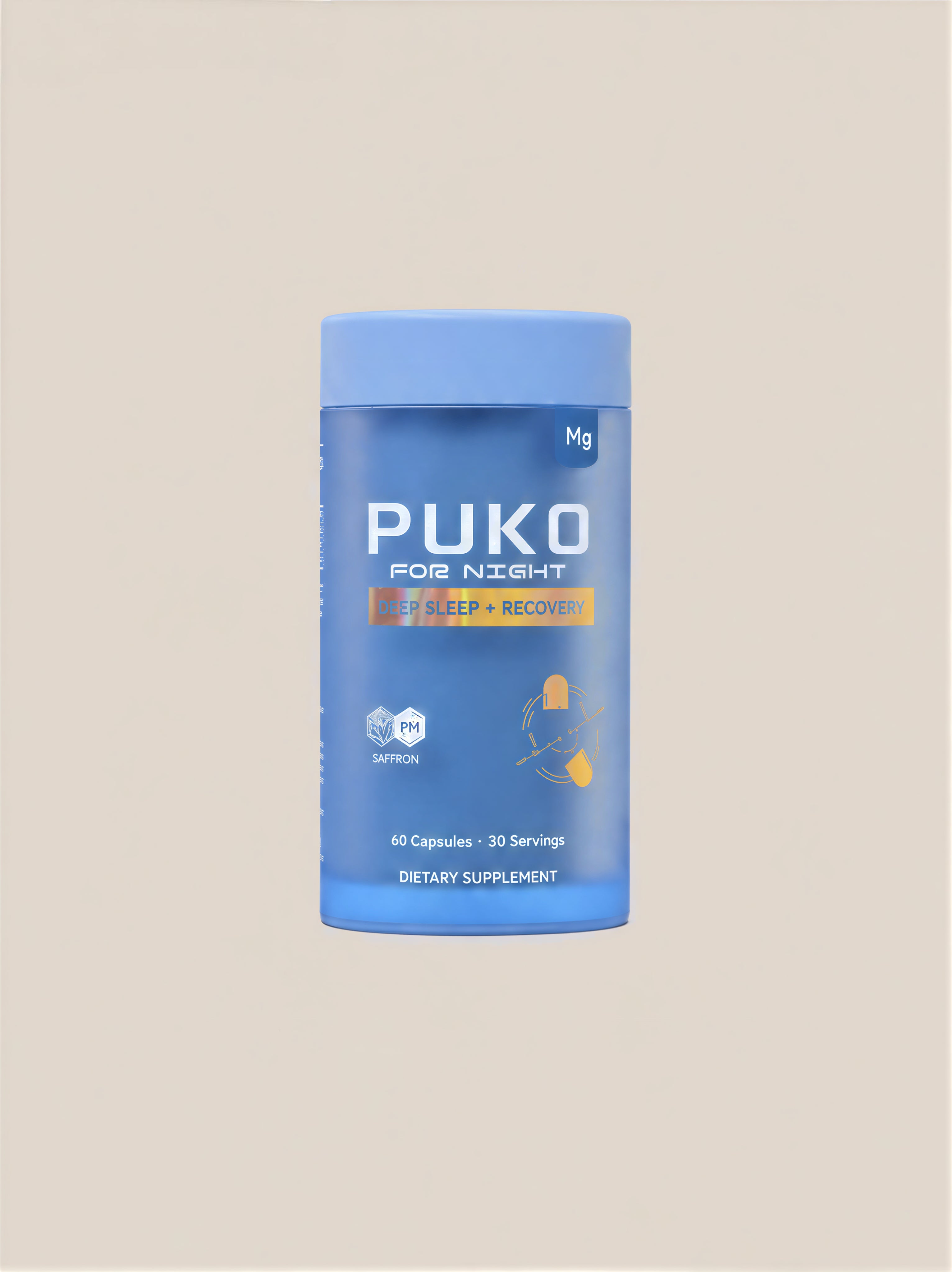
The current PUKO Deep Sleep + Recovery formula lists 240 mg of magnesium as magnesium glycinate chelate, 40 mg of Montmorency tart cherry powder and 40 mg of saffron extract per two-capsule serving.
Here, 240 mg refers to magnesium. The listed formula does not declare a separate standalone glycine amount. It should therefore be evaluated as that complete magnesium-containing formula, rather than presented as a substitute for the glycine preparation in the studies above.

This is a label example, not evidence that the finished PUKO product reproduces an ingredient study's results. It also does not establish that adding a glycine product would improve the formula's effects. Bring both full labels to a healthcare professional if you are considering combining products.
Check safety before adding or switching
For U.S. adults, the upper limit for magnesium from supplements and medicines is 350 mg a day; magnesium naturally present in food and beverages is excluded. This is a safety limit, not a sleep target. Higher supplemental amounts can cause diarrhea, nausea or abdominal cramping. Kidney impairment increases toxicity risk. Magnesium can interfere with some antibiotics and oral bisphosphonates, so ask a pharmacist about your exact medicine and spacing. NIH magnesium safety guidance.
The small glycine studies above do not establish long-term safety for everyone or the safety of combining glycine with your particular formula. Seek individual advice before use if you take medicines, have a medical condition, are pregnant or breastfeeding, or are considering supplements for a child. An amino acid's presence in food is not sufficient evidence for every supplemental use.
Persistent trouble sleeping deserves attention beyond another purchase. For chronic insomnia, cognitive behavioral therapy for insomnia (CBT-I) is usually the first treatment recommended. NHLBI's insomnia treatment guidance.
The decision
Glycine and magnesium glycinate are related names for different supplement choices. Identify the substance, read the complete serving and decide whether the study you are looking at applies to that preparation. If a comparison promises one universal winner without a direct trial, keep that uncertainty in your decision. You can finish the label check without deciding to buy either product.
Frequently asked questions
Is glycine the same as magnesium glycinate?
No. Glycine is an amino acid. Magnesium glycinate is a magnesium form bound to glycine. A magnesium serving and a separately declared glycine serving are different label quantities.
Does magnesium glycinate contain glycine?
Glycine is part of the chelate. That fact does not tell you that a retail serving is equivalent to a standalone glycine preparation studied for sleep.
Which one is better for sleep?
The verified studies in this article do not provide a direct comparison that establishes a winner. Consider the specific product, your reason for using it and your health rather than ranking unrelated study results.
Should I take glycine with magnesium glycinate?
That is not an automatic next step. These separate ingredient studies do not establish an effective combination or universal regimen. Have the full products and your medicines reviewed before adding anything.
Does a 240 mg magnesium serving mean 240 mg of glycine?
No. When the Supplement Facts panel declares 240 mg of magnesium, that number refers to magnesium. It does not declare 240 mg of glycine.
References
- Schuster et al. (2025). Magnesium Bisglycinate Supplementation in Healthy Adults Reporting Poor Sleep.
- Yamadera et al. (2007). Glycine ingestion improves subjective sleep quality in human volunteers, correlating with polysomnographic changes.
- Bannai et al. (2012). The Effects of Glycine on Subjective Daytime Performance in Partially Sleep-Restricted Healthy Volunteers.
- NIH Office of Dietary Supplements. Magnesium: Health Professional Fact Sheet.
- NHLBI. Insomnia: Treatment.
About the author
Iris writes for PUKO Nutrition, explaining published research and product-label information to help readers compare supplements. This article does not provide an individual diagnosis or treatment plan.
These statements have not been evaluated by the Food and Drug Administration. This product is not intended to diagnose, treat, cure, or prevent any disease. This article is for general education and does not replace advice from your healthcare professional.
You May Also Like
How to Choose a Phosphatidylserine Supplement

How to Fall Asleep Faster: An Evidence-Based Guide
Best Energy Supplements: A Label-First Buying Guide
Best Supplement for Staying Asleep? An Evidence Guide
L-Theanine vs Ashwagandha for Sleep: How to Compare
Can Supplements Help Sleep Apnea? Evidence, Limits and Safer Next Steps
Sleep Supplements: What the Evidence Shows and How to Compare Options