Does Chamomile Tea Help You Sleep? Tea vs Extract Evidence

By Iris
A cup of chamomile tea and a chamomile extract capsule can appear in the same sleep headline. They are different preparations, and the research does not support treating them as interchangeable.
Quick answer: Chamomile may be a pleasant part of winding down, but evidence that ordinary chamomile tea reliably treats insomnia is limited. Some trials report better sleep ratings; others find little benefit. The preparation, the people studied and the outcome measured matter. A tea bag, a concentrated extract and a multi-ingredient sleep supplement are different products.
What do the sleep studies actually show?
Start with the result you want to understand. Reporting better sleep quality on a questionnaire is not the same as sleeping longer, improving daytime functioning or showing a change in an objective sleep recording.
| Research | What was studied | What it can tell you |
|---|---|---|
| 2024 systematic review | Ten clinical studies, totaling 772 participants, using different chamomile interventions. | Some subjective sleep-quality outcomes improved. Sleep duration, efficiency and daytime functioning did not show consistent benefit. Differences among studies were substantial. |
| 2016 postpartum tea trial | Eighty Taiwanese women with poor sleep after childbirth; a two-week tea intervention compared with usual care. | Some short-term questionnaire outcomes favored tea. Group differences were no longer present at the four-week assessment. This specific population cannot stand in for all adults. |
| 2011 insomnia pilot trial | Thirty-four adults with chronic primary insomnia; standardized chamomile extract versus placebo for 28 days. | The extract did not significantly improve the principal sleep measures. It was a small extract study, not a trial of an ordinary mug of tea. |
Read the 2024 review by Kazemi and colleagues, the tea trial by Chang and Chen, and the placebo-controlled extract trial by Zick and colleagues.
Some findings are encouraging, but they do not establish an ordinary cup of chamomile tea as a dependable insomnia treatment. NCCIH also describes the information on chamomile for insomnia as very limited. See NCCIH's evidence and safety summary.
Why a tea bag is not interchangeable with an extract
Brewing involves plant material, water, temperature and steeping time. An extract is made by a different process and may be concentrated or standardized. Even two products that both say “chamomile” may deliver different preparations.
When a sleep claim cites a study, check three details:
- Was the study about tea or an extract? Find the actual intervention, rather than assuming the headline describes a beverage.
- Who took part? Postpartum participants, older adults and adults with diagnosed insomnia are not interchangeable groups.
- What changed? Look for the specific sleep measure, comparison group and study duration.
A milligram amount from an extract trial cannot be converted into a number of tea bags without product-specific information. Adding more bags is not a scientifically established way to reproduce a capsule study. Nor does a compound's proposed action at a receptor establish how quickly a finished drink will make someone sleepy.

Make the drink decision first
If you enjoy chamomile and it is appropriate for you, the ordinary tea decision can stay ordinary: choose a product you can identify, follow its brewing instructions and drink it at a comfortable temperature. You do not need to turn the mug into a sleep experiment or keep increasing its strength when a difficult night occurs.
Read the entire blend. A product marketed for evenings may contain several herbs; the word “chamomile” on the front does not tell you everything inside. If avoiding caffeine is your goal, check the complete formulation and any ingredients you add. Our guide to caffeine-free fall drinks explains how to separate a drink's base from its seasonal flavor.
There is no well-established universal chamomile-tea countdown that guarantees sleep in 20 or 30 minutes. Choose timing that fits your evening and does not leave you drinking a large amount immediately before bed. If late drinks repeatedly mean bathroom trips, look at the wider drinking pattern rather than ignoring thirst; our bedtime-water guide discusses that separate question.
Who should check before using chamomile?
Food amounts of chamomile tea are generally regarded as likely safe, but “herbal” does not mean suitable for everyone. NCCIH flags allergic reactions, including an increased concern for people allergic to related plants such as ragweed or daisies. Severe allergic reactions can occur.
Medication use changes the decision. Interactions with warfarin and certain other medicines have been reported, and sedative interactions are a concern. Ask a pharmacist or clinician about the specific tea or extract and your actual medicines; do not decide from the word “natural” or from a short ingredient list.
Safety information during pregnancy and breastfeeding is limited. A sleep study involving postpartum women does not establish safety for every breastfeeding parent or infant. Check with a healthcare professional before using chamomile in that setting. This article is written for adults and is not dosing guidance for children.
If you are comparing tea with a sleep supplement
Buying a supplement introduces another set of questions: its complete formula, labeled serving, directions, warnings and how it overlaps with what you already use. Tea research cannot answer those questions for a different formula.
Relationship disclosure: PUKO Nutrition publishes this article and sells dietary supplements. Our PUKO Unwind + Sleep contains magnesium, KSM-66 ashwagandha and lemon balm. It does not contain chamomile. The chamomile studies discussed above are not trials of this product and do not establish its effects. The bottle below is included to show why the actual ingredient list matters when comparing evening products.

Having tea does not create a need for a supplement. This comparison does not recommend combining them. If several evening products are involved, bring their complete labels to a pharmacist or clinician so the combination can be reviewed.
When the question is bigger than the drink
If sleep difficulty keeps returning or interferes with daytime life, changing herbs is unlikely to answer the whole question. Discuss the pattern with a healthcare professional, especially if there is marked daytime sleepiness or breathing trouble during sleep. For long-term insomnia, the NHLBI describes cognitive behavioral therapy for insomnia, or CBT-I, as the usual first treatment. Read NHLBI's treatment overview.
The practical takeaway
Enjoyment is a reasonable reason to choose a cup of tea. A promise of predictable sleep needs stronger, preparation-specific evidence. Check what the study tested, keep the drink and supplement decisions separate, and ask about safety when medicines, allergies, pregnancy or breastfeeding are part of the picture.
Frequently asked questions
Does chamomile tea make you fall asleep immediately?
No reliable universal onset time has been established for an ordinary cup. Feeling relaxed after a warm drink does not prove a predictable treatment effect.
Is chamomile extract the same as chamomile tea?
No. Preparation and concentration can differ. Do not convert an extract dose into tea bags or assume that research on one preparation establishes the effects of another.
Can I drink chamomile with a sleep supplement?
The full ingredients, medicines and personal situation matter. Ask a pharmacist or clinician about the actual combination instead of assuming two evening products are automatically compatible.
Does PUKO Unwind + Sleep contain chamomile?
No. Its listed ingredients include magnesium, KSM-66 ashwagandha and lemon balm. Chamomile research is not evidence for this finished formula.
References
- NCCIH: Chamomile, evidence and safety.
- Kazemi et al. Effects of chamomile on sleep: systematic review and meta-analysis, 2024.
- Chang and Chen. Chamomile tea, sleep quality and depression in postnatal women, 2016.
- Zick et al. Standardized chamomile extract for chronic primary insomnia, 2011.
- NHLBI: Insomnia treatment.
About the author
Iris writes for PUKO Nutrition about ingredient evidence, supplement labels and practical consumer decisions. This article provides general education and does not replace individual medical advice.
Statements about dietary supplements have not been evaluated by the Food and Drug Administration. Dietary supplements are not intended to diagnose, treat, cure or prevent any disease.
You May Also Like
How to Fall Asleep Faster: An Evidence-Based Guide
Best Supplement for Staying Asleep? An Evidence Guide
Can Supplements Help Sleep Apnea? Evidence, Limits and Safer Next Steps
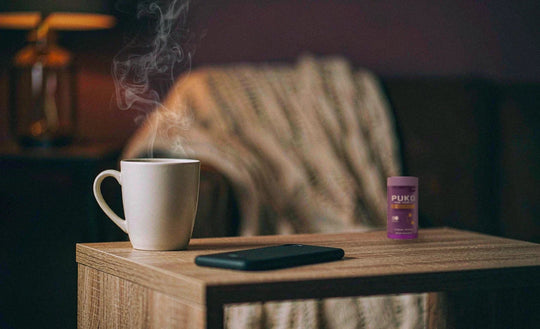
Ashwagandha Tea vs Supplement: Which Form Works Better?
How to Sleep During the Day After a Night Shift
Magnesium and L-Theanine Together for Sleep: What to Know

Lemon Balm Benefits for Sleep: What the Research and Labels Show