Ashwagandha Dosage: How Much Per Day and How Long

Most clinical research on ashwagandha uses 300-600 mg per day of a standardized root extract, taken consistently for at least 4-8 weeks. You may notice a calmer baseline within the first couple of weeks, but ashwagandha is an adaptogen that works by helping the body adapt to everyday stress over time, not an instant effect. The type of extract matters as much as the milligrams: standardized, clinically studied extracts like KSM-66® (made from the root, standardized to withanolides) are what most of the good research is based on.
How much ashwagandha per day?
Here’s how the dosing breaks down in practice:
| Goal | Typical daily range (standardized root extract) |
|---|---|
| Everyday stress & a sense of calm | 300-600 mg |
| Sleep / evening wind-down support | 120-300 mg (often in the evening) |
| General wellness / maintenance | 250-500 mg |
Two things people miss:
- It’s the extract that’s dosed, not raw powder. A “600 mg” of a concentrated, standardized extract is very different from 600 mg of plain ground root. Standardization to withanolides (the active compounds) is what makes a dose meaningful.
- More isn’t the goal. Clinical benefits show up in the 300-600 mg range; megadosing doesn’t add proportional benefit and isn’t well studied.
PUKO Unwind + Sleep KSM-66 provides 200 mg of KSM-66® ashwagandha (standardized to 5% withanolides) paired with magnesium glycinate and lemon balm, an evening-appropriate dose designed to support winding down rather than a daytime energy dose.
How long does ashwagandha take to work?
This is the other big question, and the honest answer is: it’s gradual.
- Week 1-2: some people notice a slightly calmer baseline, less “wired,” easier evenings.
- Week 4-8: this is the window most clinical studies measure, and where the stress-support and sleep-quality findings tend to show up.
- Ongoing: adaptogens are about a sustained shift in how the body handles stress, so consistency matters more than any single dose.
If you’re expecting a melatonin-style “knockout” the first night, you’ll be disappointed, that’s not how adaptogens work. Think of it less like a switch and more like turning down the background stress over a few weeks.
What the research links ashwagandha to
Ashwagandha (Withania somnifera) has been traditionally used in Ayurveda for over 3,000 years, and modern trials have studied standardized extracts for their role in:
- Supporting the body’s response to everyday stress, including studies measuring healthy cortisol levels.
- Supporting sleep quality and the feeling of waking refreshed.
- Supporting a calm, balanced mood.
Much of this work uses KSM-66®, one of the most clinically studied full-spectrum ashwagandha extracts. (Research supports a structure/function role; ashwagandha is not a treatment for any medical condition.)
Capsules, gummies, powder, or tea?
The format you choose mostly affects dose precision and taste:
- Capsules (standardized extract), the most reliable way to get a precise, clinically relevant dose of a standardized extract. This is how KSM-66® is delivered in PUKO Unwind + Sleep.
- Ashwagandha gummies, convenient, and the benefits are the same in principle, but they often contain a smaller or non-standardized dose and add sugar. Check the extract type and withanolide content.
- Ashwagandha powder, flexible and traditional (often stirred into warm milk as “moon milk”), but raw powder is less concentrated than a standardized extract, so the effective dose is harder to pin down.
- Ashwagandha tea, a gentle, traditional way to enjoy the herb, though the amount of active compounds you get from a brew is low and variable, better for ritual than for a measured dose.
When to take ashwagandha
Timing depends on your goal. For stress and general wellness, morning or split dosing is common. For sleep support, the evening makes sense, which is how PUKO pairs it with magnesium and lemon balm in a wind-down formula. Either way, take it consistently and ideally with food.
Is ashwagandha safe?
For most healthy adults, standardized ashwagandha is well tolerated in the studied dose range. A few sensible cautions: it’s generally not recommended during pregnancy; people with thyroid conditions or autoimmune conditions, or those on related medications, should check with a healthcare provider; and quality matters, choose a standardized, third-party-tested extract rather than an unbranded powder of unknown dose. We compare ashwagandha with magnesium for sleep in magnesium glycinate vs. ashwagandha for sleep, and cover the stress angle in magnesium glycinate for anxiety.
Ashwagandha dosage: frequently asked questions
How much ashwagandha should I take per day?
Most clinical research uses 300-600 mg per day of a standardized root extract for stress support. For evening/sleep support, smaller amounts (around 120-300 mg) are common. PUKO Unwind + Sleep provides 200 mg of KSM-66®.
How long does ashwagandha take to work?
Some people feel a calmer baseline in 1-2 weeks, but most clinical effects are measured at 4-8 weeks of consistent use. It’s an adaptogen, so it builds gradually rather than acting instantly.
Should I take ashwagandha in the morning or at night?
For general stress, morning or split dosing is common; for sleep support, evening makes sense. Take it consistently, ideally with food.
Is KSM-66 better than regular ashwagandha?
KSM-66® is a standardized, full-spectrum root extract used in much of the clinical research, so you know the dose and withanolide content. Unbranded powders vary widely in strength, which makes the “dose” far less meaningful.
Can I take ashwagandha every day?
Most healthy adults take it daily within the studied range. Avoid during pregnancy, and check with your provider if you have a thyroid or autoimmune condition or take related medication.
† These statements have not been evaluated by the Food and Drug Administration. This product is not intended to diagnose, treat, cure, or prevent any disease. Ashwagandha is not recommended during pregnancy; consult your healthcare provider if you have a medical condition or take medication. Individual results may vary.
You May Also Like
Sleep Supplements: What the Evidence Shows and How to Compare Options

How Long Does KSM-66 Ashwagandha Take to Work?

Phosphatidylserine and Ashwagandha Together: Can You Stack Them (and How)?

Lemon Balm vs Ashwagandha for Stress and Sleep

Saffron vs Ashwagandha for Mood and Stress: Which One Does Your Evening Need?
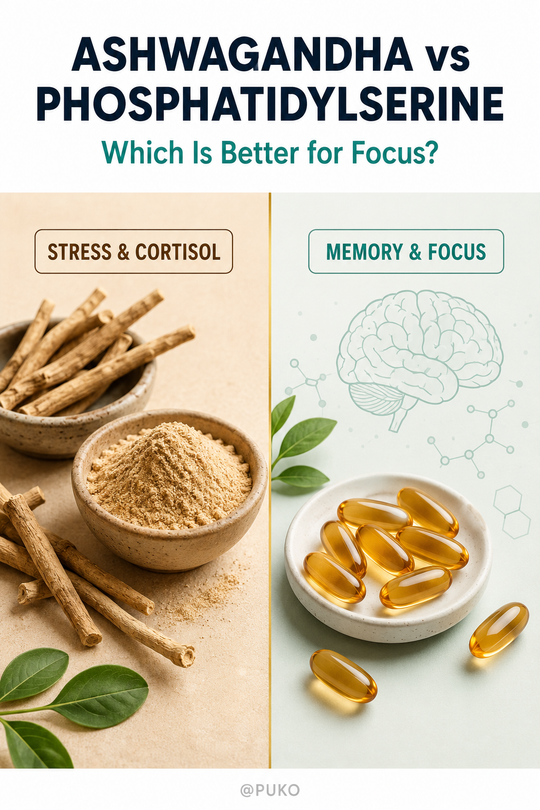
Ashwagandha vs Phosphatidylserine for Focus: Which One (or Both) Should You Take?
Sleep Support and Focus Support: The Daily Wellness Guide (2026)