Does Tart Cherry Help You Sleep? What 3 Clinical Studies Show

Written by Iris · Updated October 4, 2026
TL;DR: Small trials suggest tart cherry drinks may improve some sleep measures, but the findings are not consistent enough to promise a particular number of extra minutes or a reliable time to benefit. The widely shared “84 minutes” result comes from a small 2018 pilot, not the 2012 study. Juice research also does not establish an equivalent capsule dose, and the sources reviewed here did not provide a direct tart-cherry-versus-melatonin comparison.
Relationship disclosure: This educational article is published by PUKO Nutrition, a dietary supplement brand. These ingredient studies did not test a PUKO finished product.

What the three clinical studies actually tested
| Study | Participants and duration | Finding to keep in context |
|---|---|---|
| Pigeon, 2010 | 15 older adults with insomnia; two-week treatment periods | Some insomnia measures improved, but not every sleep outcome differed from placebo. |
| Howatson, 2012 | 20 healthy adults; seven days of concentrate or placebo | Some measured sleep outcomes and urinary melatonin increased. |
| Losso, 2018 | Eight participants analyzed; two-week treatment periods | A sleep-duration difference was observed in a very small pilot. |
Pigeon et al.: a modest result, not an insomnia cure
The 2010 pilot trial used a proprietary tart cherry and apple juice beverage, eight ounces twice daily. Compared with placebo, insomnia severity and waking after sleep onset improved. Sleep latency, total sleep time and sleep efficiency did not show significant between-treatment differences. Participants still had insomnia symptoms. This does not support saying the drink reliably adds 25 minutes of sleep.
Howatson et al.: seven days in healthy adults
The 2012 randomized crossover trial studied Montmorency tart cherry concentrate in 20 healthy volunteers. Urinary melatonin, total sleep time and sleep efficiency increased relative to placebo. A short study in healthy adults cannot establish a long-term treatment for chronic insomnia or predict an individual response.
Losso et al.: where the 84-minute claim came from
The 2018 pilot study enrolled 11 people; three were excluded after sleep apnea was identified, leaving eight analyzed. Participants drank 240 mL of tart cherry juice twice daily during the treatment period. Laboratory sleep duration was 84 minutes longer with juice than placebo. That estimate comes from a small, specific sample and protocol; it is not a typical result you should expect from a supermarket drink or supplement.
What these findings do not tell us
- No dependable onset promise: A study lasting seven days or two weeks does not mean most users will improve within that time.
- No juice-to-capsule conversion: Beverage volume, concentrate volume and milligrams of powder are different measurements. These trials do not validate a universal extract dose.
- No proven finished-product effect: Sharing an ingredient with a study does not make a multi-ingredient supplement clinically tested.
- No established nightly-use guarantee: Short trials cannot establish long-term safety for every person or every formulation.

Tart cherry vs melatonin: what changes the decision?
The sources reviewed here did not provide a direct trial comparing tart cherry with a melatonin supplement. That means the evidence cannot name a universal winner or establish that either option causes fewer next-day effects. A 2025 systematic review of tart cherry and sleep found mixed results across small, heterogeneous studies, while NCCIH’s melatonin overview explains that melatonin evidence depends on the sleep question being asked.
| Question | Tart cherry evidence | Melatonin evidence |
|---|---|---|
| What was studied? | Specific juices or concentrates in small, short trials. | A supplement used across different contexts, including circadian-timing problems and some sleep-onset outcomes. |
| Can the research dose be copied? | No. Juice volume does not establish an equivalent powder, extract or capsule dose. | No universal dose follows from the evidence, and the actual content can differ from the label. |
| Does it treat chronic insomnia? | The tart cherry trials do not establish that. | NCCIH notes that clinical guidelines have recommended against melatonin for chronic insomnia because evidence is insufficient. |
| Is long-term use proven safe for everyone? | No. The trials were short and used specific preparations. | Short-term use appears generally safe for many adults, but long-term safety information is limited. |
Why the actual label matters
For a tart cherry drink, compare the serving, preparation instructions, total sugars and other ingredients. For a supplement, check the complete formula rather than the ingredient name alone. A 2023 JAMA research letter found that most tested melatonin gummies did not match their labeled melatonin amount, so the label and independent quality information matter when evaluating a specific product.
Can tart cherry and melatonin be taken together?
The studies reviewed here do not establish an effective combination dose, timing, or added benefit. Tart cherry’s naturally occurring compounds do not make a drink or powder equivalent to a standardized melatonin supplement. Check every active ingredient and ask a clinician or pharmacist when you take medicines, manage a condition, are pregnant or breastfeeding, or are considering products for a child.
A practical decision before buying
- Name the goal. Jet lag or a shifted body clock is a different question from repeated nighttime waking or persistent insomnia.
- Match the product to the evidence. A juice study does not validate a capsule, and an ingredient study does not prove a finished multi-ingredient product.
- Compare the real label. Review serving size, preparation, total sugars, other active ingredients, warnings and quality information.
- Escalate persistent symptoms. Loud snoring, breathing pauses, ongoing insomnia or significant daytime impairment deserves clinical assessment rather than repeated product switching.
Our sleep supplement label checklist explains what to compare, and our guide to supplement label claims separates a marketing statement from evidence.
How a PUKO product fits this label-first approach
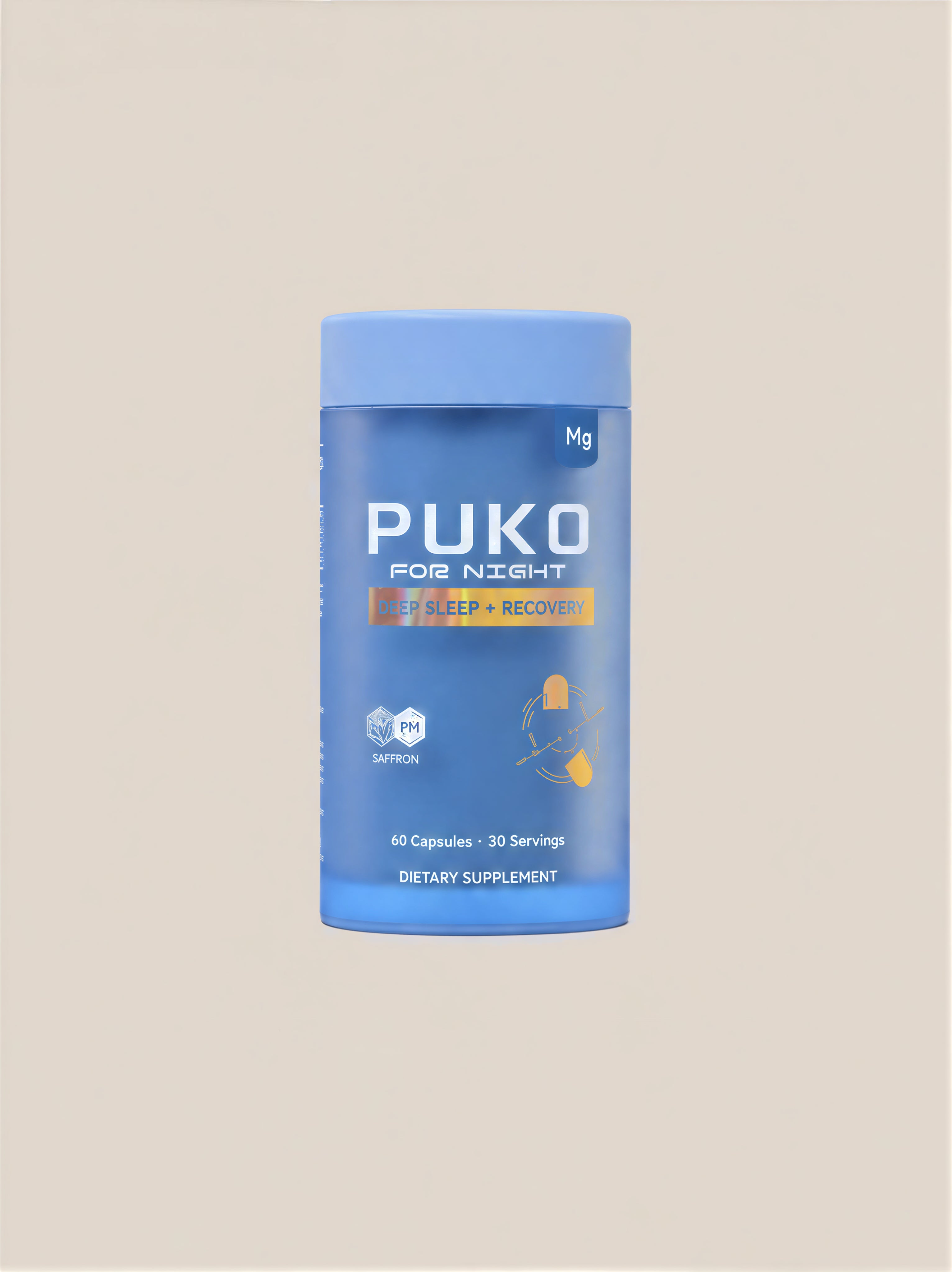
PUKO Deep Sleep + Recovery combines magnesium, Montmorency tart cherry powder and saffron extract, and is described as made without added melatonin. Review its current Supplement Facts and directions for serving amounts. This label-reading example does not establish that the finished formula reproduces a tart cherry juice study or outperforms a melatonin supplement.
Frequently asked questions
Is tart cherry as effective as melatonin for sleep?
The sources reviewed here did not provide a direct head-to-head comparison, so they cannot establish equal effectiveness or name a winner.
How much tart cherry should I take for sleep?
These small trials do not establish one recommended amount for everyone. Do not convert a study’s juice volume into a capsule dose. Follow the specific product instructions and seek individualized advice when appropriate.
Does tart cherry contain melatonin?
Tart cherries contain naturally occurring compounds studied in relation to sleep. Their presence does not mean a serving supplies a standardized melatonin dose or will have a predictable sleep effect.
Can I combine tart cherry with a melatonin supplement?
The studies reviewed here do not establish an effective combination dose, timing, or added benefit. Check the complete labels and ask a clinician or pharmacist when medicines, health conditions, pregnancy, breastfeeding or use in children are relevant.
Can I replace insomnia treatment with cherry juice?
No. The trials summarized here do not establish tart cherry as a replacement for assessment or established insomnia care.
Verdict
Tart cherry research is interesting but limited, and melatonin evidence varies by the sleep problem being studied. The sources reviewed here did not provide a head-to-head comparison that could support a universal winner. Choose a drink for its nutritional fit, judge a supplement by its complete label and evidence, and seek clinical guidance for persistent sleep problems.
About the author
Iris writes evidence-aware supplement education for PUKO Nutrition, with an emphasis on transparent labels, careful comparisons and practical consumer questions. This article is not personalized medical advice.
These statements have not been evaluated by the Food and Drug Administration. Dietary supplements are not intended to diagnose, treat, cure, or prevent any disease.
You May Also Like

How to Fall Asleep Faster: An Evidence-Based Guide
Best Supplement for Staying Asleep? An Evidence Guide
Can Supplements Help Sleep Apnea? Evidence, Limits and Safer Next Steps
Ashwagandha Tea vs Supplement: Which Form Works Better?
Does Chamomile Tea Help You Sleep? Tea vs Extract Evidence
Tart Cherry Juice vs Concentrate: Compare the Prepared Serving
How to Sleep During the Day After a Night Shift