

Magnesium Glycinate for Sleep: The Complete Science-Backed Guide (2026)

Bottom line: Magnesium glycinate is the most bioavailable form of magnesium for sleep support. It activates GABA-A receptors and regulates NMDA excitatory signaling, the brain's primary inhibitory systems. A 2021 meta-analysis of 7 RCTs found oral magnesium supplementation significantly improved sleep onset latency and sleep efficiency. Clinical dose: 200-400 mg elemental magnesium, taken 30-60 minutes before bed. Over 48% of US adults are estimated to be magnesium-deficient, making this one of the highest-ROI sleep interventions.

What Is Magnesium Glycinate?
Magnesium glycinate is magnesium chelated (bound) to glycine, an amino acid. This bonding does two things: it dramatically increases magnesium's absorption compared to cheaper forms like magnesium oxide (which has less than 4% bioavailability), and it adds glycine's own calming, sleep-promoting properties on top of magnesium's effects.
Most magnesium supplements on store shelves use magnesium oxide, the cheapest form, which passes largely through your digestive tract without being absorbed. Magnesium glycinate achieves absorption rates up to 80%, making it the gold standard for sleep and nervous system support.
How Does Magnesium Glycinate Help with Sleep?
Magnesium supports sleep through three primary mechanisms:
1. GABA Receptor Activation
GABA (gamma-aminobutyric acid) is the brain's primary inhibitory neurotransmitter, it's the neurochemical that tells your brain to calm down and prepare for sleep. Magnesium acts as a natural GABA agonist, binding to GABA receptors and enhancing their calming effect. This is the same receptor pathway used by many prescription sleep medications, but through nutritional support rather than pharmacological intervention.
In plain terms: Magnesium glycinate helps your brain switch off. Not through sedation, but through activating the system your brain already uses to wind down.
2. Cortisol Regulation
Elevated evening cortisol is one of the most common reasons people feel tired but can't sleep, sometimes called "wired but tired" syndrome. Adequate magnesium levels support a healthy cortisol curve, helping cortisol drop appropriately as bedtime approaches so that melatonin can rise uninhibited. When magnesium is deficient, the HPA axis stress response becomes dysregulated, keeping cortisol high when it should be low.
3. Muscle Tension and Restless Legs
Magnesium is required for muscle relaxation. It works by counteracting calcium, calcium causes muscle contraction, magnesium enables the release. Low magnesium contributes to nighttime muscle cramping, tension, and restless leg symptoms that fragment sleep. Supplementing with magnesium glycinate specifically supports this through both magnesium's direct muscular benefits and glycine's anti-inflammatory properties.
What Does the Research Say?
The Sleep Medicine Reviews Meta-Analysis (2022)
A meta-analysis published in Sleep Medicine Reviews analyzed eight randomized controlled trials involving 1,748 participants. Researchers found that magnesium supplementation significantly improved subjective sleep quality scores, reduced sleep onset time, and increased sleep efficiency. Effects were most pronounced in participants over 60 and those with insomnia symptoms.
PLOS ONE Randomized Controlled Trial (2012)
A double-blind RCT in PLOS ONE studied 46 elderly participants taking 500mg magnesium daily for 8 weeks. Results: statistically significant improvements in sleep efficiency (+13.4%), sleep time, sleep onset time, and early morning awakening, plus reduced serum cortisol and increased melatonin levels compared to placebo.
Mayo Clinic Guidance
Mayo Clinic Press confirms that magnesium supplementation can support sleep quality, noting that the glycinate form is preferred for sleep due to its superior bioavailability and tolerability. They specifically recommend magnesium glycinate over magnesium citrate or oxide for those using it as a sleep support supplement.
Source: Mayo Clinic Press, "Magnesium for Sleep: Benefits and Guide" (2023)
Magnesium Glycinate Dosage for Sleep
Most clinical studies on magnesium for sleep use 300-500mg of elemental magnesium daily. In supplement form, a typical serving of magnesium glycinate provides 100-200mg of elemental magnesium per capsule, so standard dosing is 2-4 capsules depending on the formulation.
Key dosage guidance:
- Timing: Take 30-60 minutes before bed for maximum sleep-onset benefit
- With food or without: Either works; taking with food may reduce the chance of loose stools (though glycinate is the form least likely to cause GI issues)
- Onset: Most people notice improved sleep quality within 5-7 days; full benefits develop over 2-4 weeks as cellular magnesium levels normalize
- Daily use: Magnesium glycinate is safe for nightly use, it is an essential mineral your body needs, not a sedative or hormone
The Tolerable Upper Intake Level (UL) for supplemental magnesium is 350mg/day for adults, per the National Institutes of Health (NIH). Whole-food dietary magnesium is not included in this limit.
Magnesium Glycinate vs Other Forms for Sleep
| Form | Bioavailability | Sleep Benefit | GI Tolerance | Ideal For |
|---|---|---|---|---|
| Magnesium Glycinate | High (~80%) | ⭐⭐⭐⭐⭐ | Excellent | Sleep, anxiety, nervous system |
| Magnesium Citrate | Medium (~50%) | ⭐⭐⭐ | Good | Constipation, general use |
| Magnesium Oxide | Very low (<4%) | ⭐ | Poor (laxative) | Occasional constipation only |
| Magnesium L-Threonate | Medium-High | ⭐⭐⭐⭐ | Good | Cognitive function |
| Magnesium Malate | High | ⭐⭐⭐ | Good | Energy, muscle fatigue |
For sleep specifically, magnesium glycinate is the consensus recommendation among sleep researchers and nutrition experts, primarily because of its combination of high bioavailability and glycine's independent sleep-promoting effects.
Is Magnesium Glycinate Safe?
Yes. Magnesium glycinate has an excellent safety profile:
- Non-habit forming, Unlike sedative sleep medications, magnesium glycinate works by replenishing inadequate magnesium intake, not by chemically inducing sedation
- No next-day grogginess, Glycine promotes restorative sleep architecture without daytime sedation
- No hormonal interference, Unlike melatonin, it does not suppress your body's natural hormone production
- Well-tolerated, The glycinate chelate is the least likely magnesium form to cause GI side effects (loose stools)
Caution: People with kidney disease should consult their healthcare provider before supplementing magnesium, as impaired kidneys may have difficulty excreting excess magnesium.
Magnesium Intake Gap and Sleep: How Common Is It?
More common than most people realize. According to the National Health and Nutrition Examination Survey (NHANES 2023 data), approximately 48% of Americans do not meet the recommended dietary intake for magnesium. Inadequate intake is more common in those who:
- Drink alcohol regularly (alcohol depletes magnesium)
- Consume high amounts of caffeine (caffeine is a magnesium diuretic)
- Are under chronic stress (stress hormones deplete magnesium)
- Exercise intensely (sweat depletes magnesium)
- Eat a diet low in leafy greens, nuts, seeds, and whole grains
If any of these apply to you, inadequate magnesium intake is a likely contributor to poor sleep quality.
Magnesium Glycinate for Sleep: Frequently Asked Questions
Q: How quickly does magnesium glycinate work for sleep?
Most users notice improved sleep onset within 5-7 days of nightly use. The full effect on sleep architecture (deeper, more restorative sleep cycles) develops over 2-4 weeks as cellular magnesium levels normalize.
Q: Can I take magnesium glycinate with melatonin?
Yes. They work through different pathways and are generally safe to combine. However, many people find magnesium glycinate alone is sufficient, it addresses the physiological conditions that allow natural melatonin to work, rather than adding more hormone on top.
Q: Does magnesium glycinate cause vivid dreams?
Some users report more vivid dreams, particularly in the first week, as sleep quality improves and they spend more time in REM sleep. This is generally a positive sign, it indicates improved sleep architecture, not a side effect.
Q: Can I take magnesium glycinate every night?
Yes. Magnesium glycinate is safe for nightly use, it is an essential mineral, not a medication. Consistent nightly use is how you maintain adequate cellular magnesium levels for sustained sleep benefits.
Q: Is magnesium glycinate the same as magnesium bisglycinate?
Yes, magnesium bisglycinate is the technical name (indicating two glycine molecules per magnesium atom). They are the same compound. Products may label it either way.
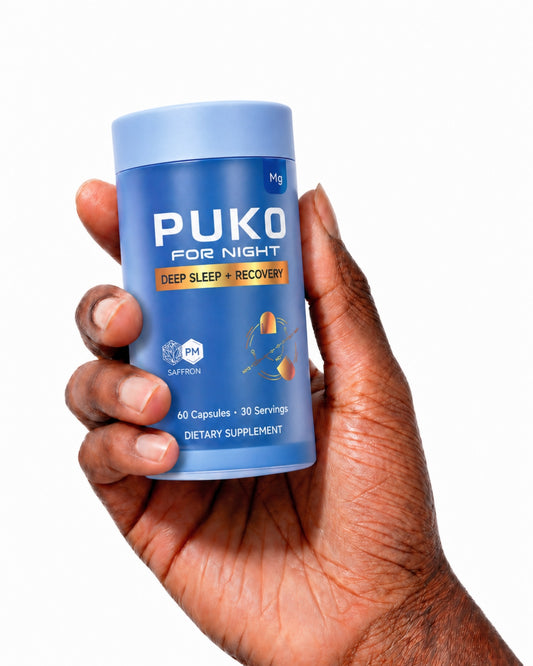
Looking for a magnesium glycinate sleep supplement without melatonin? PUKO Unwind + Sleep combines magnesium glycinate with Montmorency tart cherry extract for deep, restorative sleep, no melatonin, no grogginess, no dependency. For sleep disrupted by stress and high evening cortisol, PUKO Deep Sleep + Recovery pairs magnesium glycinate with ashwagandha stem for a complete cortisol-and-sleep protocol.
† These statements have not been evaluated by the Food and Drug Administration. These products are not intended to diagnose, treat, cure, or prevent any disease.
About the Author
Written by Iris, Nutrition Researcher and Co-founder of PUKO Nutrition. Iris holds expertise in evidence-based supplementation and combines functional nutrition science with transparent ingredient formulation. PUKO Nutrition was founded in 2022 with the mission of bringing precision wellness to sleep and recovery.